I’ve been thinking lately about the desserts that live in other people’s childhoods. Lemon Delicious is one of them — an Australian classic, beloved in the UK and New Zealand, and known stateside as Lemon Pudding Cake. Quick orientation for anyone who hasn’t met it: in Australia, “pudding” just means a baked dessert (not a dessert in a mug), and “cosy” means cozy. This one is the coziest kind: a soufflé-light sponge with a pool of bright, tangy lemon custard sauce underneath, made from a single thin batter.
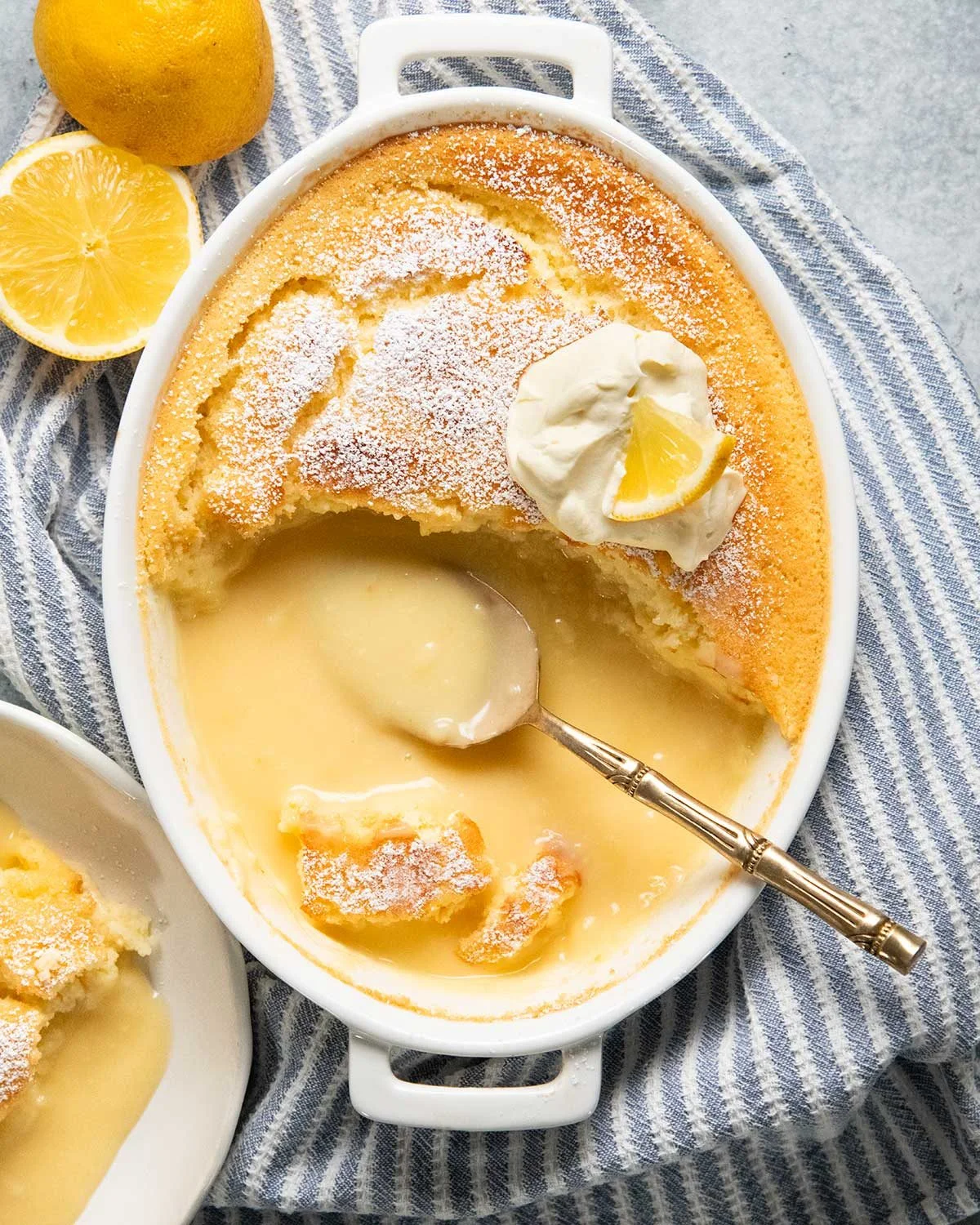
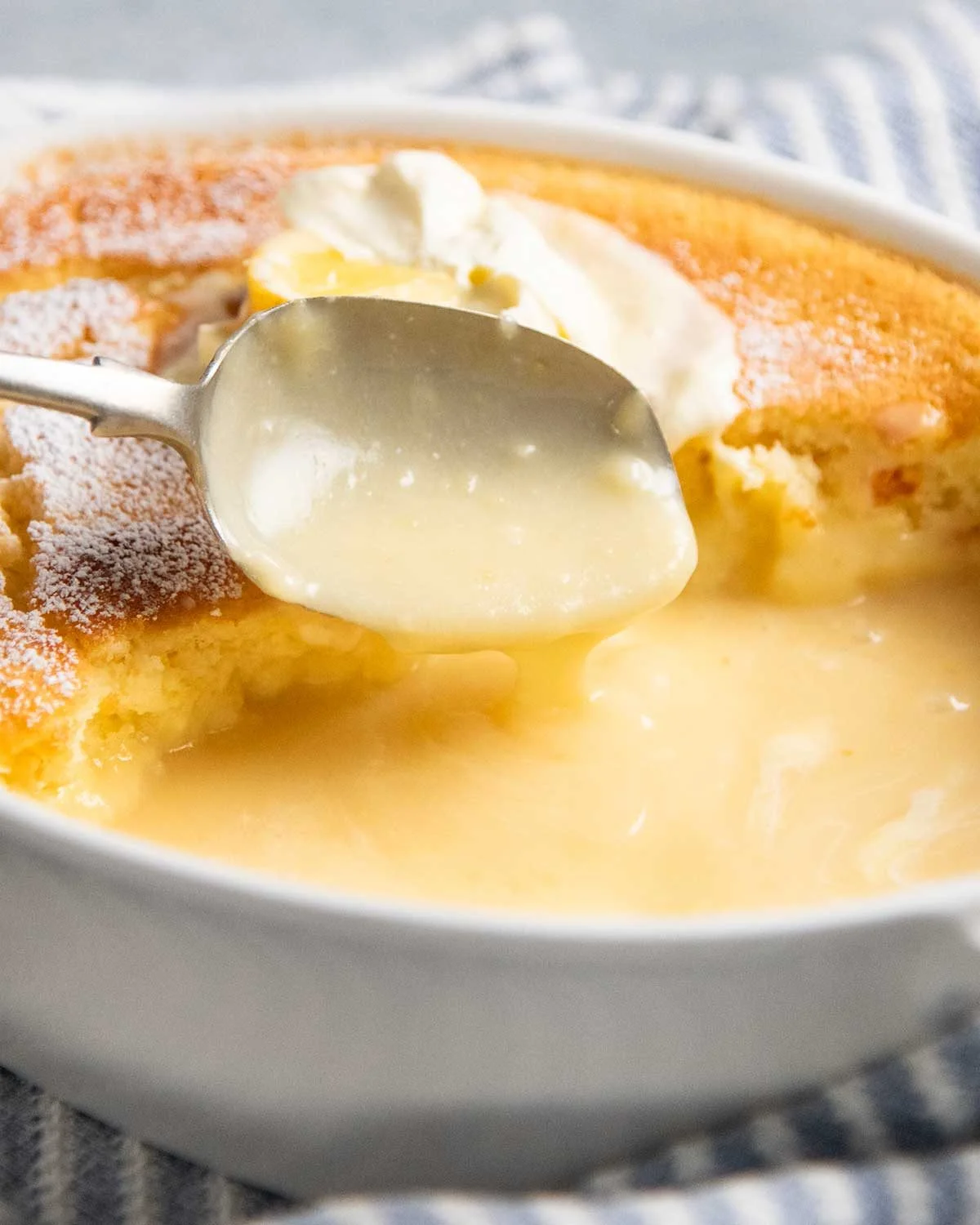
Here’s the part that got me. Every version of this recipe I could find produced barely a token layer of sauce, and most of it soaked straight into the cake. I wanted sauce I could scoop up and spoon over every bite. So I went down the rabbit hole — and the fix turned out to be almost embarrassingly simple: 50% more milk. That extra half cup thins the batter substantially and lands you with more than half a cup of extra lemon cream sauce. Like this:
My first attempt at this was, let’s be honest, a flop. It came out dry, crumbly, way too sweet, and eye-wateringly sour — somehow, all at once. Sam was so polite about it that it stung even more. It takes real skill to make a pudding that bad. 😂
And here’s the maddening part of developing this recipe: you can’t tell if it worked from the outside. Every single version looked like a success coming out of the oven. I only found out by digging a spoon through the cake layer to check the sauce. So I made it over and over until the sauce was exactly what I wanted. This is the version that passed.
What you need
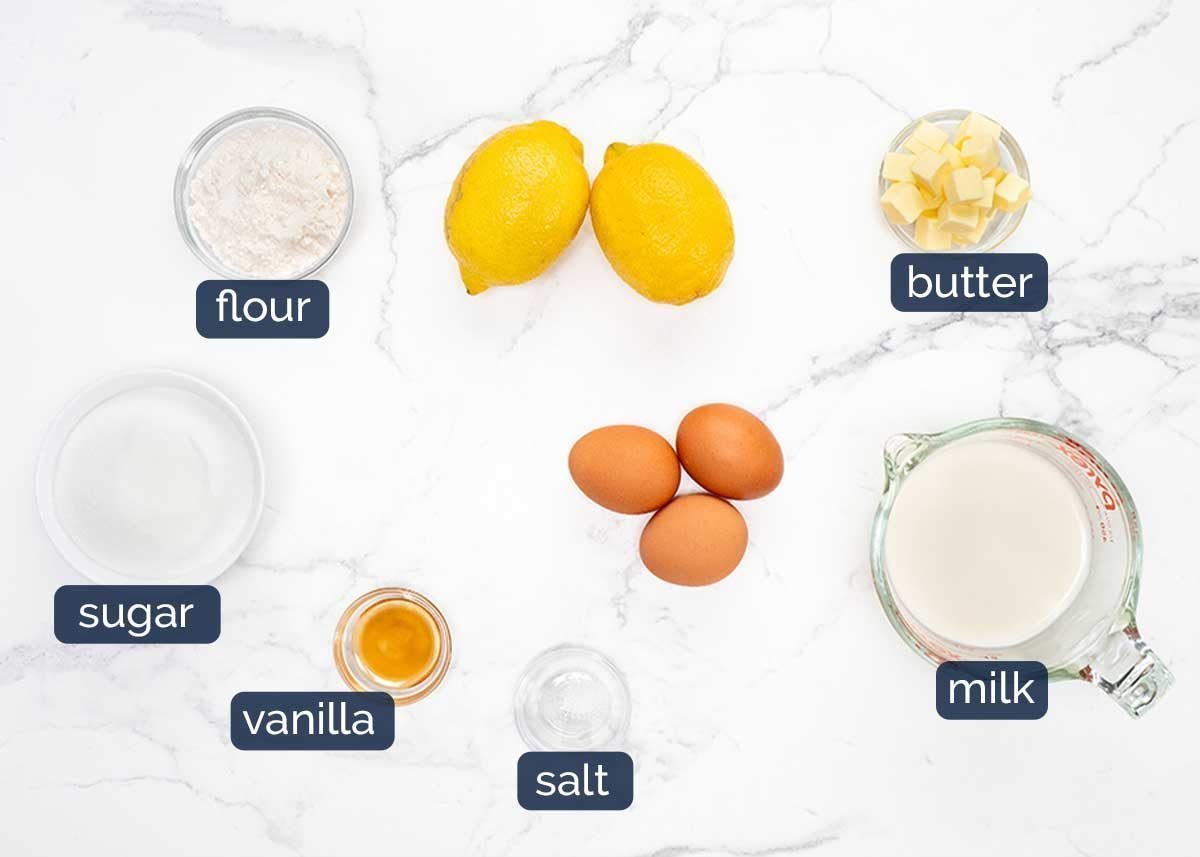
All pantry basics — except the lemons, unless you’re lucky enough to have a tree in the backyard and can just pluck two. I love that the dairy goes in straight from the fridge: eggs, milk, butter. Nothing needs to come to room temperature, which is the kind of thing that makes a dessert realistic on a busy weeknight.

- Lemons – 2 large lemons, which gets you 1 tablespoon of zest and 1/2 cup of juice. Fun fact: the zest provides most of the lemon flavor; the juice mainly adds tartness.
- Sugar – 1 cup (200g) of caster or superfine sugar works beautifully; regular granulated sugar works fine too. I know that sounds like a lot, but it balances the juice — an early version of mine used half the sugar and was so tart it was barely edible.
- Milk – 1 1/2 cups, full fat if you can get it. The custard sauce comes out with a better mouthfeel, the way full fat cream beats low-fat.
- Flour – just 1/3 cup (50g) of plain / all-purpose flour, which is why the sponge comes out more like a delicate soufflé than a cake. No self-raising flour, no baking powder, no baking soda — the rise comes entirely from whipped egg whites. Gluten-free flour works too (more on that below).
- Eggs – 3 large eggs (the ones in cartons labeled “large”, about 2 oz / 50–55g each in the shell), separated. Fridge cold is fine.
- Unsalted butter – 60g / 4 tbsp, cold and cut into small cubes so it melts evenly.
- Vanilla extract – 1/2 teaspoon, optional, for a touch of extra flavor.
- Salt – a pinch, to bring the whole thing together.
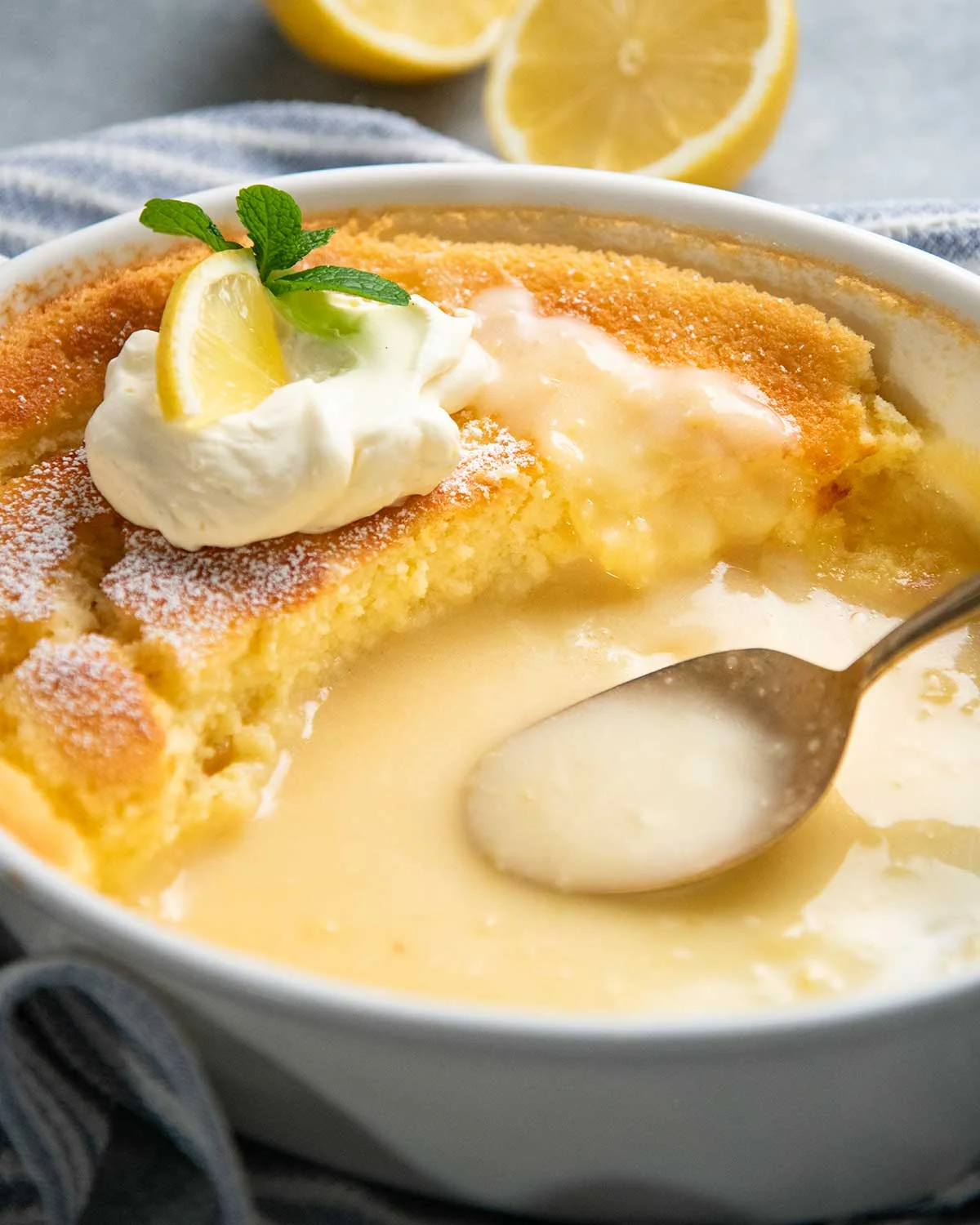
For serving: whipped cream (use 3/4 cup of cream) or crème fraîche, a dusting of icing sugar, and if you want it to look dinner-party ready, a small lemon slice, a raspberry, or a mint sprig.
How the magic works
The word “magic” really is the only word for it. The thin batter has whipped egg whites folded through it, and that’s what makes the cake rise. The moment you stop stirring, it starts separating on its own: the foamy egg white part rises to the top, and a darker lemon mixture settles underneath. It bakes exactly like that — the egg white layer becomes the light sponge, and the lemon mixture underneath transforms into that silky custard sauce. No separate sauce to make, no extra steps.
How to make it
Most versions of this recipe start by creaming softened butter with an electric beater, then you have to wash the bowl before whipping egg whites into it. I skip that with melted butter: everything gets mixed with a handheld whisk, and the clean electric beater is saved for the egg whites. Bonus: no remembering to soften the butter.
- Melt the butter, gently. Put the butter cubes in a heatproof bowl and microwave in 20 second bursts until almost melted, then whisk by hand to finish melting with the residual heat. It should look milky, not like yellow oil. The point is that the butter isn’t so hot that it melts everything you stir into it next. (If it’s fully melted and hot, that’s fine too — just let it sit for a few minutes.)
- Make the thin batter. Whisk the sugar, vanilla, and lemon zest into the butter. Add the lemon juice and egg yolks and whisk until combined. Add the flour and whisk until lump free, then whisk in the milk. The batter will be very thin and runny — that’s the point, it’s supposed to be.
- Beat the egg whites. In a separate bowl, beat the egg whites until stiff with an electric beater or stand mixer with the whisk attachment. Stiff means upright pointy Santa hats, not floppy elf hats (that’s only soft).
- Fold, don’t stir. Fold a big scoop of the whipped egg whites into the batter first — it lightens the batter and makes the rest easier. Then fold in the rest with a rubber spatula, big gentle scooping motions rather than vigorous stirring, so you don’t knock the air out. A few lumps of egg white are fine.
- Fill the dish. Pour the batter gently into a 5–6 cup (1.25–1.5 litre) ceramic or glass baking dish — no greasing needed. I prefer a smaller dish with tall sides over a flat one, because you get a thicker sponge layer. You can fill it close to the top, about 1 cm / 0.2 inch from the rim, because it barely rises. Ceramic makes a softer cake and looser sauce; a metal pan works too, but the sauce comes out thicker, more like a custard dollop than a pourable sauce. Ramekins: fill six 200 ml / 7 oz ramekins with a ladle, scooping from the bottom of the bowl so every one gets an even amount of the foamy top layer that becomes the cake.
- Bake in a water bath. Set the dish (or a tray of ramekins) in a larger roasting pan and fill with boiling water until it comes halfway up the sides. The water bath cooks it gently and evenly, so the sponge stays light and moist and the sauce underneath doesn’t dry out. Preheat the oven to 180°C / 350°F (160°C fan). Bake 35 minutes for the single dish, or 30 minutes for ramekins, until the top is light golden. It will still feel jiggly if you poke it — that’s the sauce.
- Rest, dust, serve. Rest for 5 minutes so the sponge can stabilize — it’s very delicate hot out of the oven. Dust with icing sugar, then serve with big scoops, making sure to lift plenty of sauce with every one. A dollop of whipped cream or crème fraîche really rounds out the tangy lemon.
Making it ahead (the accidental discovery)
Here’s the part that makes this a dinner party dessert dream. One morning I was reheating leftover Lemon Delicious for breakfast (don’t judge me — there were a lot of leftovers during testing) and it came out almost perfectly. On a scale of 1 to 10, with 10 being fresh-from-the-oven perfection, I give it a 9 — and I don’t hand out 9s lightly.
Refrigerate until you need it, then reheat in the microwave until the center is warm (one ramekin takes about 40 seconds on high, in 30 second bursts from then on, less as it warms up). The sponge fluffs right back up and the custard loosens into a warm pouring sauce again. Ramekins reheat more evenly than the large dish, and the closer you bake it to serving time, the better it will be. Honestly, if your guests don’t catch you with the microwave, I’d bet most wouldn’t guess it wasn’t fresh.
FAQ
Can I use other citrus? Yes — orange or lime work. Start with the same amount of juice and zest, taste the batter before you fold in the egg whites, and if you want more flavor, add up to an extra 2 tablespoons of juice and as much zest as you like.
How long do leftovers keep? 3 to 4 days in the fridge. The longer it sits, the more the sauce soaks into the cake, but honestly it was still very good on day 4.
Can I freeze it? Unfortunately not. The sauce turns watery and a bit split, and it’s buried under cake, so there’s no stirring it back together.
Can I make it gluten-free? Yes — it’s a good candidate, because it rises from egg whites rather than baking powder. I hadn’t tried it myself when I first wrote this up, but quite a few readers swapped in gluten-free flour, same amount for same amount, and reported perfect results. That’s the one to follow.
What if I want more sauce? You already have the version with more sauce — the 50% extra milk is the whole trick. If you follow the recipe as written, the sauce will be generous.
What’s in it exactly? One batter, no shortcuts: 60g / 4 tbsp butter, 1 cup sugar, 1 tbsp lemon zest, 1/2 cup lemon juice, 1/2 tsp vanilla, a pinch of salt, 3 large eggs separated, 1 1/2 cups milk, 1/3 cup (50g) flour. That’s the entire list. About 350 calories per serving, assuming 5 servings.
A note from Nora
It’s easy to dismiss a recipe that’s been around since my grandmother’s kitchen, but this one has earned its spot here. One thin batter, a water bath, and a pool of sauce that reheats like it just came out of the oven — it’s the kind of dessert that makes an ordinary cold-night meal feel like an occasion. If I can make it on a Tuesday, it’s a keeper. Sam says it’s the only dessert I make that he’ll actually eat twice in one week. Biscuit has already inspected the empty baking dish and, as far as we can tell, approved.
发表回复