分类: Drinks

  • White Sangria: My 1-Hour Summer Pitcher

    White Sangria: My 1-Hour Summer Pitcher

    I’ve been thinking lately about the drinks that make a backyard evening feel like a real occasion. Not the complicated ones — not the stuff that needs a cocktail shaker, a juicer, or forty-five minutes of your attention. Just something you can hand people as they drift in from the grill, something that tastes like summer decided to be helpful.

    That’s the job this white sangria does for us. It’s fresh, sparkly, and honestly the easiest thing I make for gatherings. And the part I love most: it doesn’t need to sit overnight to taste good. About an hour in the fridge, and it’s ready.
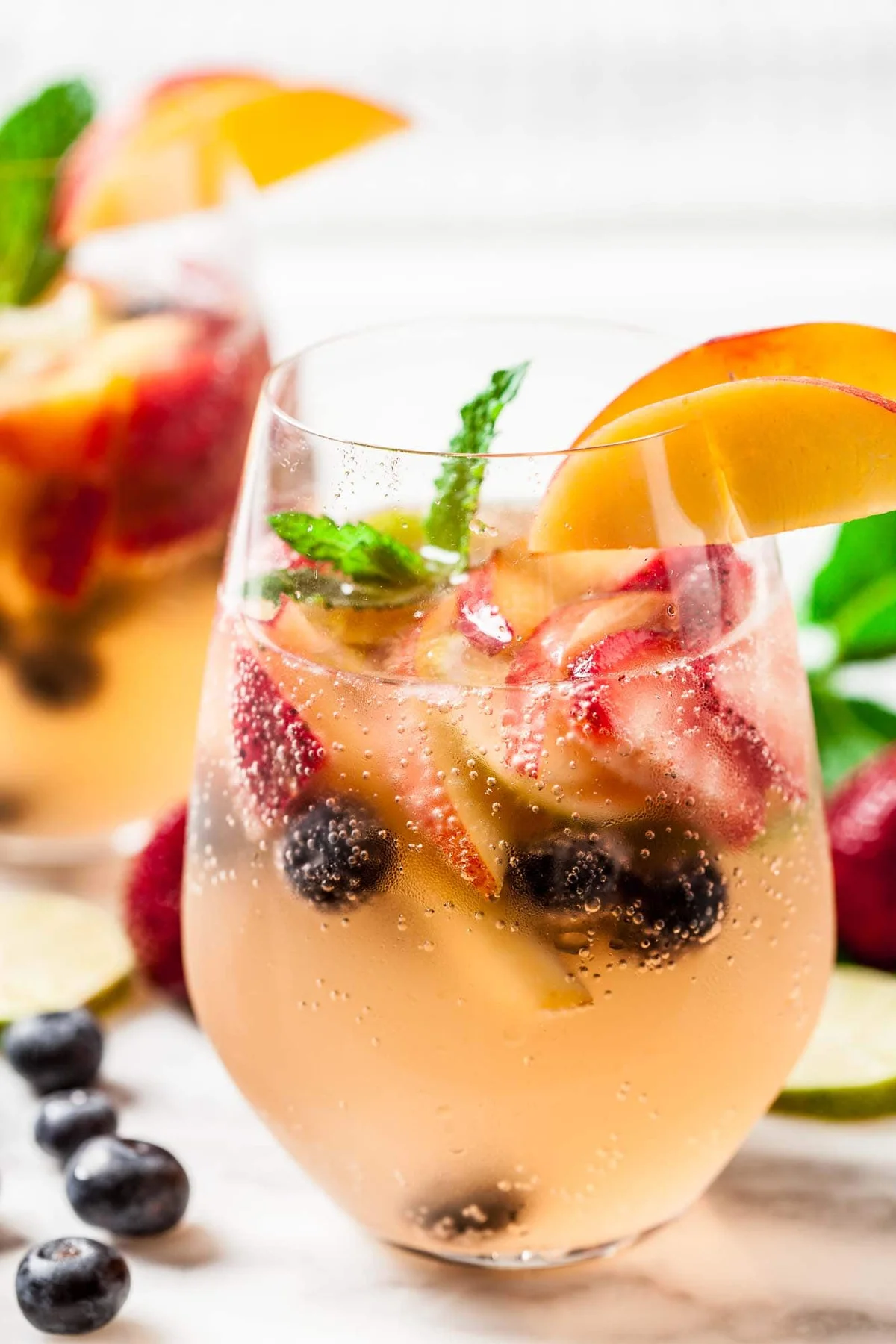
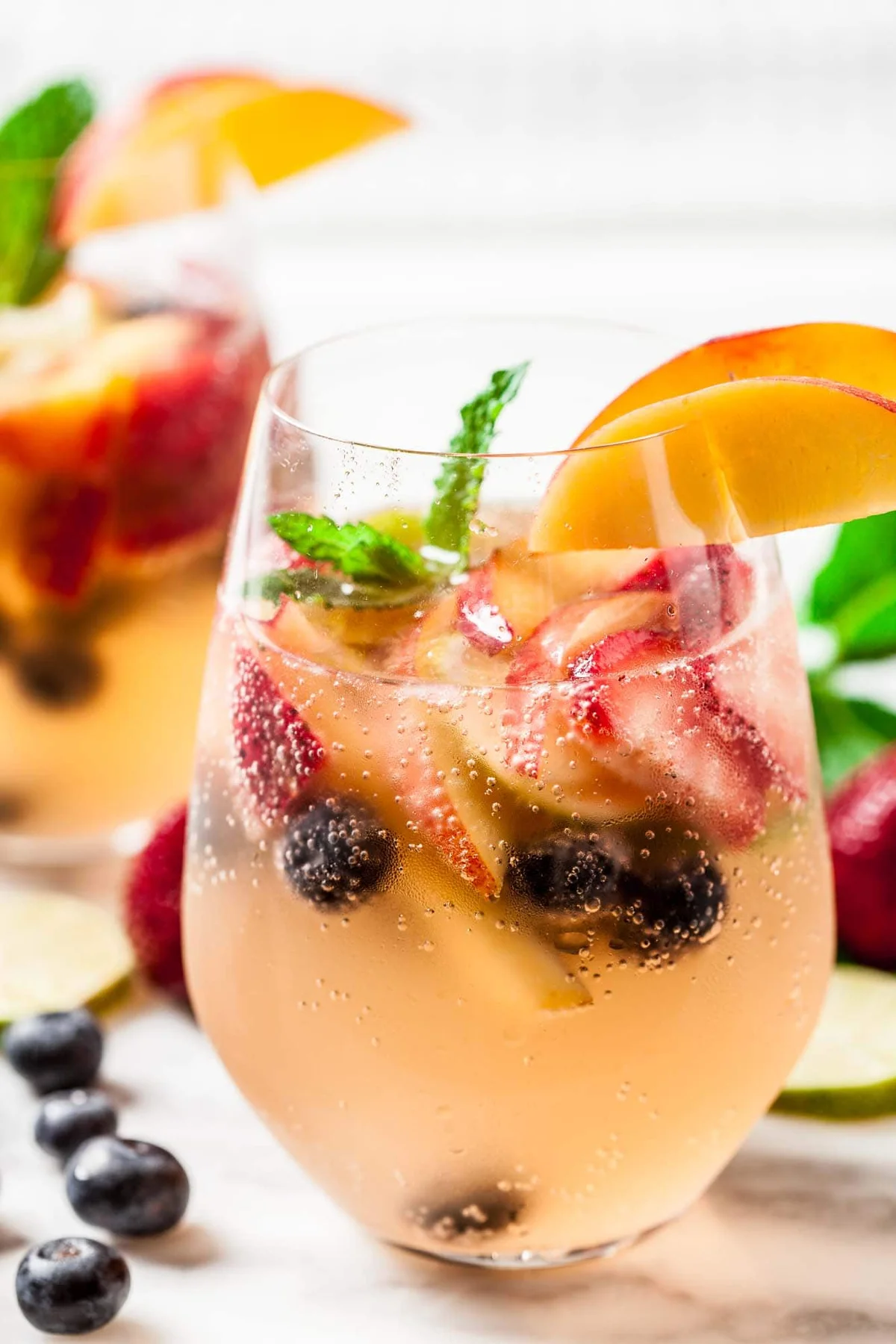
    A tall glass of white sangria with peaches and mint

    This is the drink I reach for on warm nights when friends come over and the plan is mostly ‘sit outside and eat until you can’t.’ Sam usually handles the grilling, Biscuit patrols the patio, and I keep the pitcher topped off. It’s one of those small rituals that makes our kitchen feel like a place people actually want to be.

    Why this sangria works

    A few things make this my default for summer:

    • Ready in about an hour. Traditional sangrias benefit from sitting for hours to develop flavor. This one is fruit-forward and bright from the start — chill it, pour it, done.
    • Light and not too sweet. White wine, peach nectar, and berries keep it crisp instead of cloying. There’s a citrusy lift that makes it feel like a cold drink on a hot night, even when it’s really just wine and fruit.
    • Easy to make your own. Swap the berries, go with rosé instead of white, top it with sparkling water if you’re not drinking. It’s a base, not a rulebook.

    I make it all summer, and I’ve found it works just as well in early fall — the peach and berries hold up fine when the evenings turn cooler and you want something a little festive without going full apple cider.
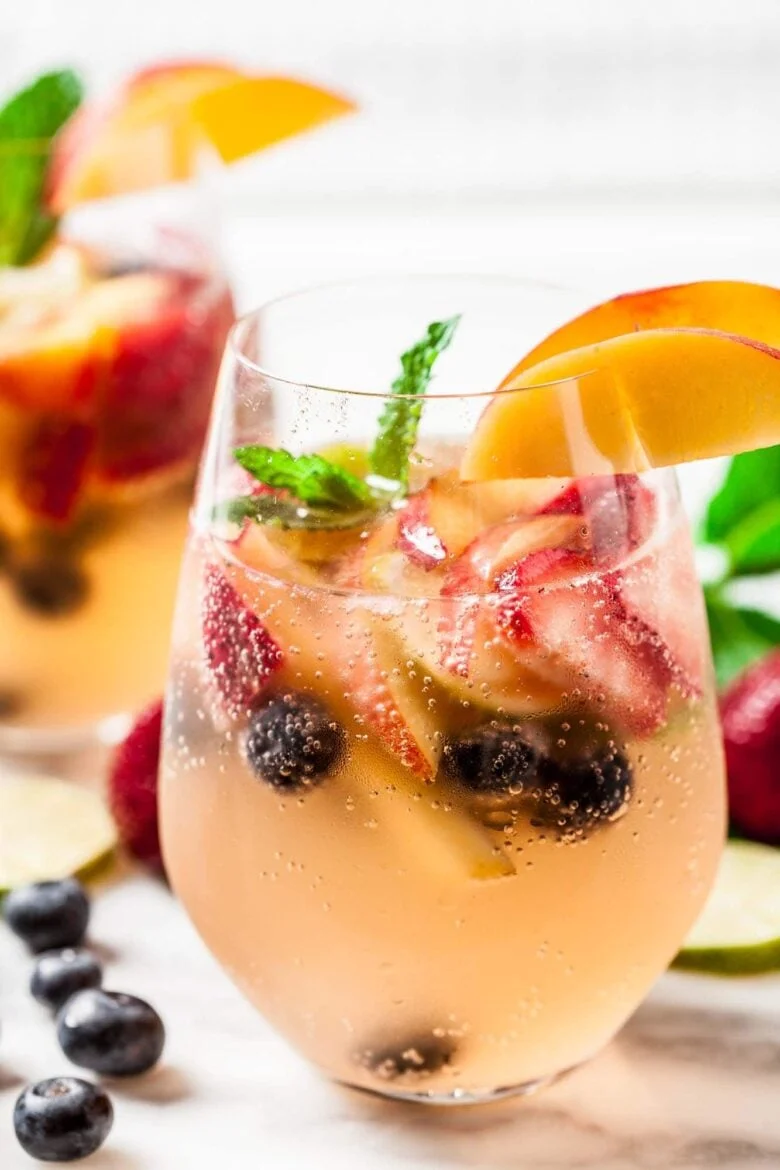
    White sangria glass on a summer patio table

    What you’ll need

    Everything is the kind of thing you’ll already have or can grab in one store trip:

    • White or rosé wine — a crisp, dry bottle that you’d actually pour a glass of on its own. That’s the base, so don’t reach for the cheapest shelf.
    • Peach nectar — from concentrate is fine. It adds a concentrated peachy sweetness and depth without taking over the wine.
    • Grand Marnier or Cointreau — just a splash of orange liqueur. It’s what balances the sweetness of the fruit and gives the drink a little warmth. If you don’t have either, see the swaps below.
    • Peaches, berries, lime, lemon-lime soda, and fresh mint — the stuff you can see, smell, and photograph.

    The recipe

    Yield: 6 servings · Prep: 10 minutes · Chill: about 1 hour

    Ingredients

    • 2 peaches, sliced thin
    • 1 cup berries — blueberries, raspberries, or sliced strawberries
    • 1 lime, thinly sliced
    • 1 bottle crisp white wine, or rosé
    • 1 cup peach nectar, from concentrate
    • ⅓ cup Grand Marnier, or Cointreau
    • Lemon-lime soda, for topping
    • Fresh mint leaves, for garnish

    Instructions

    1. In a pitcher, combine everything except the lemon-lime soda.
    2. Cover and chill about 1 hour.
    3. Pour into glasses, leaving room for soda and ice.
    4. Top each glass with about ¼ cup of lemon-lime soda.
    5. Add ice, garnish with a mint leaf, and serve immediately.

    Swaps that actually work

    I test these in my own kitchen before I promise they’re good, so here’s what I stand behind:

    • Wine: a crisp white like Sauvignon Blanc or Pinot Grigio is light and refreshing. Rosé gives you a prettier blush color and more fruity depth. If you like something sweeter, Moscato or a lightly sparkling Prosecco works.
    • Fruit: peaches and berries are the classic here, but feel free to mix in whatever’s ripe — nectarines, mango slices, pineapple chunks, orange rounds. This recipe doesn’t mind improvisation.
    • Liqueur: Grand Marnier and Cointreau are what I use, but triple sec, peach schnapps, or even a splash of Chambord all work.
    • No peach nectar? Mango nectar works, and honestly even white grape juice gets you close enough.
    • No alcohol? Swap the wine for alcohol-free white wine, white grape juice, or apple juice, and trade the orange liqueur for fresh orange juice. It’s a perfectly good mocktail.
    Pitcher of white sangria with sliced peaches and berries

    Prepping ahead

    This is where the recipe earns its keep. You can combine the wine, peach nectar, liqueur, and fruit in the pitcher up to 1 day in advance — cover it and chill it in the fridge. The flavors mingle while the fruit soaks up the sangria, and it’s better for it.

    The one rule: keep the lemon-lime soda out of the pitcher. Add it right before serving so the fizz is still alive. If it goes flat, the whole drink feels tired.

    How long it keeps

    Mixed without soda, it’s good in the fridge for up to 24 hours. With soda and ice, drink it right away. Leftovers? You can freeze the sangria (no soda, no fruit) for up to 1 week, then add fresh soda and fruit when you’re ready to serve.

    What to serve with it

    Keep the food simple — the drink is the show. A few things that work well with this:

    • Something with peaches: a caprese-style salad with fresh peaches and basil echoes the flavors in the glass.
    • A cheese board — crackers, fruit, and charcuterie are an effortless match.
    • Grilled shrimp is a great pairing; something fast and light that doesn’t fight the drink.

    A note from Nora

    The first time I made this, I added the soda to the pitcher an hour early because I was in a hurry. By the time guests arrived, it had gone flat and the peaches had gone pale. I’ve made it properly every time since — thin slices, soda last, mint on top. If I can make it on a Tuesday, it’s a keeper, and this one is the kind of Tuesday drink you’ll make all summer long.
    Keep Reading

  • Tapas Until You Can’t: Inside Peps, Amsterdam’s Cozy Spanish Wine Bar

    Tapas Until You Can’t: Inside Peps, Amsterdam’s Cozy Spanish Wine Bar

    I almost skipped this place. It’s on Bilderdijkstraat in Oud-West — a quiet side street behind the fancy shopping, with red awnings and a sign that promises tapas, cava, and pinchos at the bar. We were in Amsterdam for a long weekend a few months ago, and by dinner we were slightly hungry and very done with heavy meals.

    We weren’t. And neither was the rest of the room.

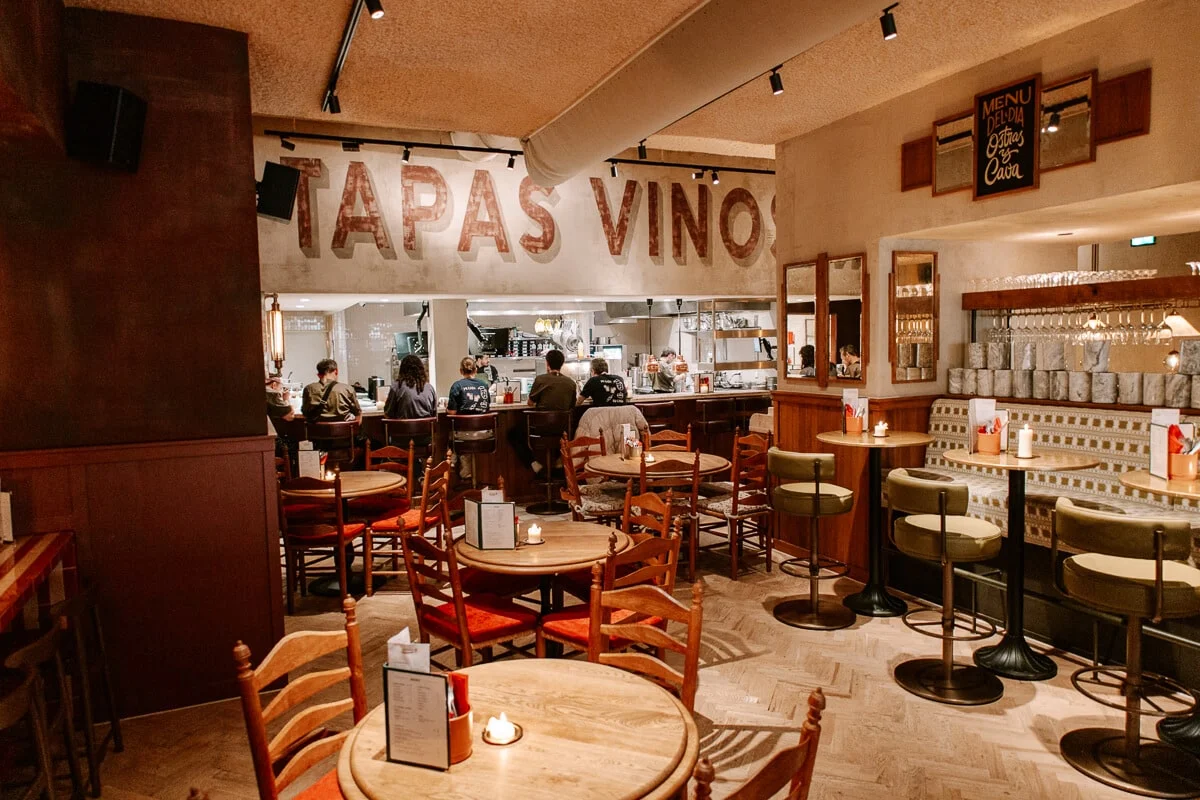
    Warmly lit interior of Peps tapas and wine bar in Amsterdam

    Inside it’s warm and loud in the best way — wooden tables, candlelight, wine bottles stacked to the ceiling, a long bar where you can watch the pinchos come together. There’s a dark, living-room corner at the back where, honestly, we forgot to look at the time. The service is relaxed, in the sense that nobody is hovering; the evening is allowed to be yours.

    No menu order, just a table that keeps growing

    There’s no real seating order here. You order a few small things, they come, you order a few more, they come again. The card has more than sixty small dishes — oysters, charcuterie, tapas, cold and hot pinchos, Spanish snacks that keep sneaking past your dinner plans.

    Board of Spanish tapas and cured ham at Peps Amsterdam

    There’s one detail I’ll remember the whole year: Uurtje Frituurtje — literally, the hour of fried snacks. Between 16:00 and 18:00, 10 euros buys you a bottomless snack board of Spanish fried snacks. Don’t overthink it; it’s exactly the kind of thing you want at happy hour.

    Plated Spanish dishes from Peps on dark wooden table

    What we actually ordered

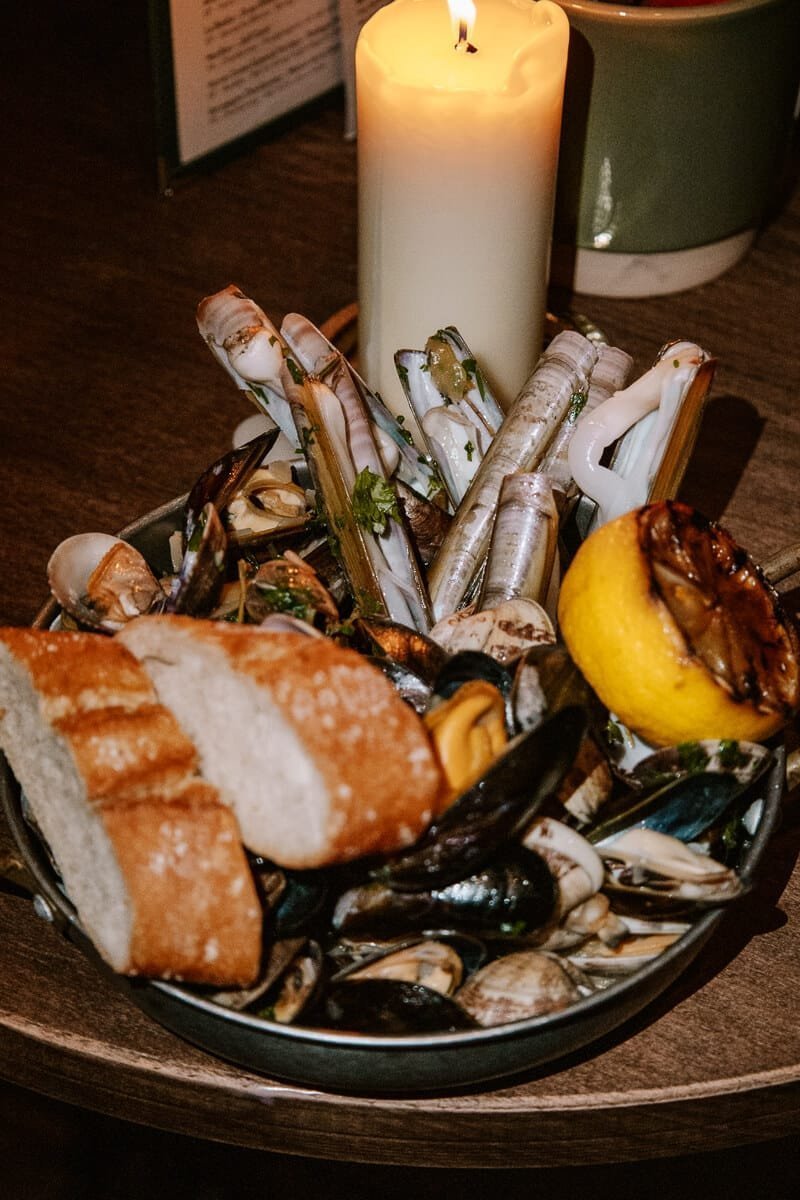
    Something for everyone: pimientos de padrón, pata negra (the cured Spanish ham that I’m not exaggerating when I call the best thing on the board), crispy fried chicken with chipotle mayo, and shellfish from the sea — mussels, vongole, razor clams, sautéed in white wine with gremolata.

    Shellfish and mussels sautéed in white wine at Peps

    The last one is chef Ramon van Welzenis’s own favorite — and he’s ex-BAUT, one of the highest-end restaurants in Amsterdam (if that name hasn’t reached you yet, take it from me: he’s cooked at the top of the Dutch game, and it shows). You can taste the care in a small plate like that without it ever feeling showy.

    Sangria’s friendlier next door

    The wine card changes with the seasons, from dry Verdejo to deep Rioja, and it’s cheap enough to feel casual. There’s cava, homemade sangria, and cocktails like the Readpertineje and the Aqualychee — the lychee and lime one, from what I can tell, grew on me one sip at a time.

    Go here if you want an early, easy snack during the afternoon, or a Spanish evening in Oud-West that will totally drift into a later hour without you noticing.

    Homework: check the Peps site for hours and what’s on right now.

    A note from Nora

    Sam’s take: “We ordered four things. I can’t remember when the fourth thing arrived.” Same story every night — and we came home talking about going back, which in our household is the highest score I have in a restaurant.

    Maybe that’s the real gift of small plates: they don’t fix anything, but they remind you that even an ordinary Tuesday dinner can hold something lovely.

    Keep Reading

  • The Screwdriver: My Foolproof Two-Ingredient Cocktail

    The Screwdriver: My Foolproof Two-Ingredient Cocktail

    It’s been one of those long, gray weeks here in Portland — the kind where the sun shows up, sneaks off, and shows up again just enough to make you wonder if you imagined it. By Wednesday night I was done with cooking. I wanted something cold, something orange, something that took exactly as long as it took to wash the glass.

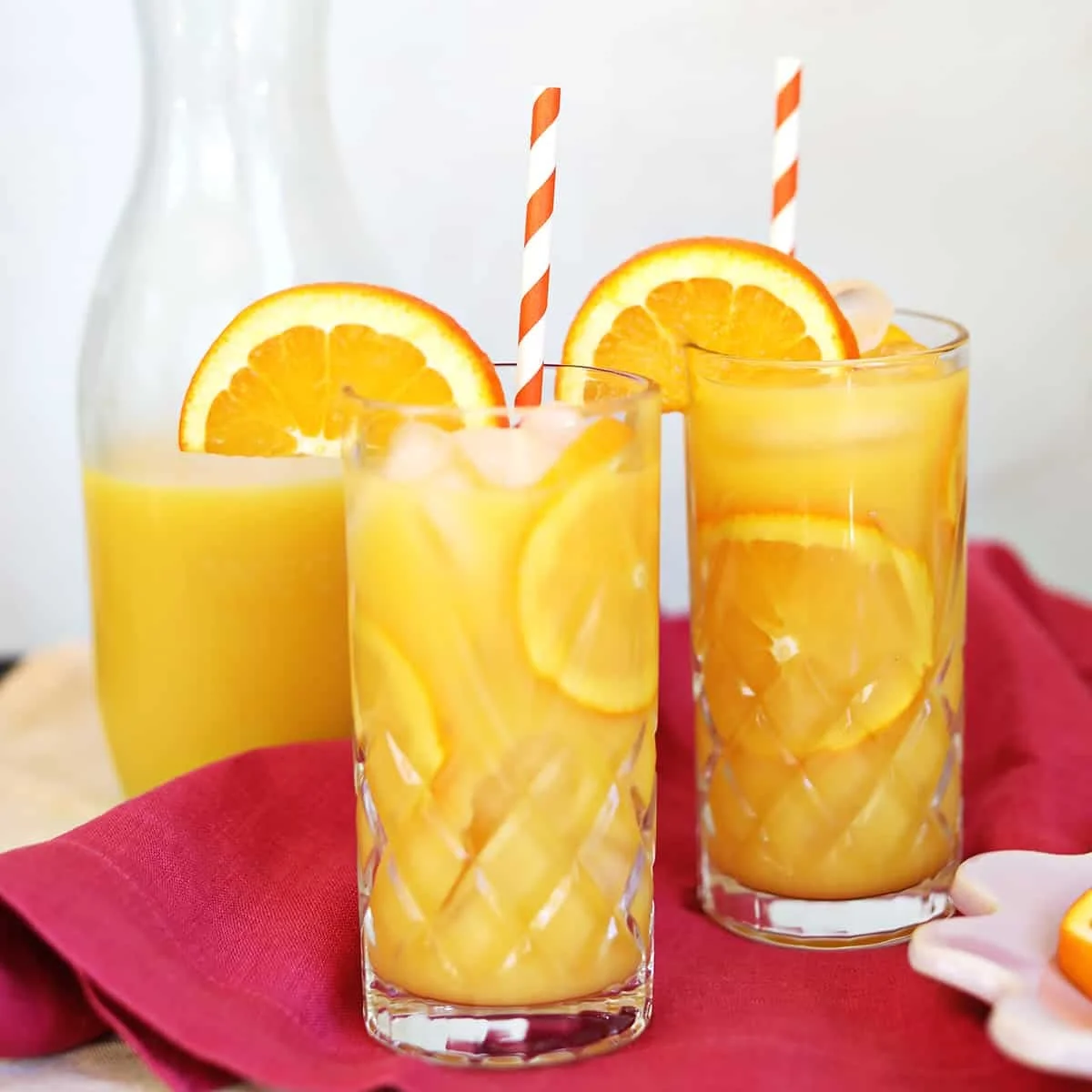
    Two tall glasses of screwdriver cocktails with ice and orange slices

    So I made a screwdriver. And I keep coming back to it, which is weird for a drink with two ingredients. But here’s the thing I learned: the proportions matter a lot. Get them wrong and you’re either pouring vodka over flat orange juice, or serving something that tastes like breakfast. Get them right and it’s cold, bright, and gone before it melts.

    What you’ll need

    That’s it. Three things, and only one of them is a spirit.

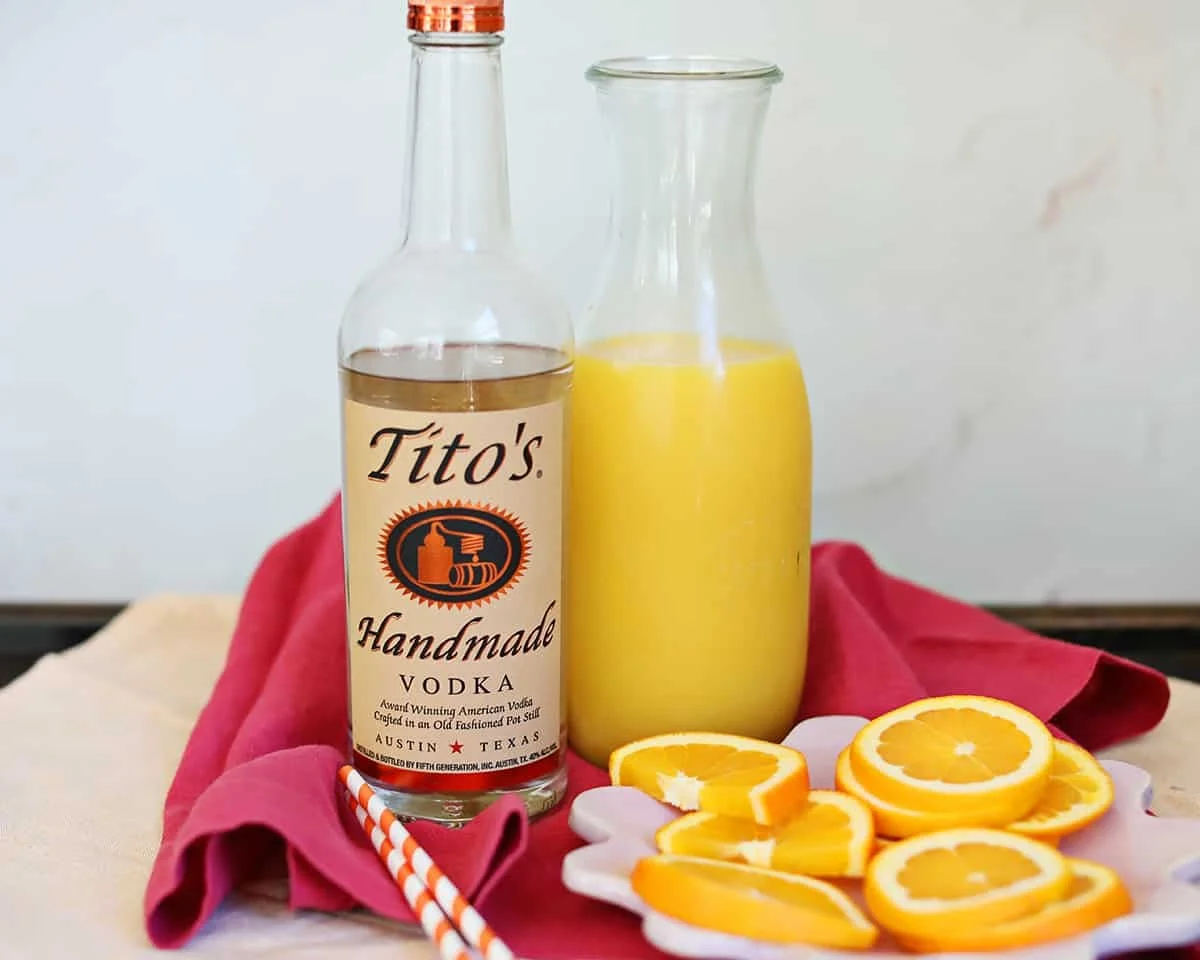
    • Orange juice — freshly squeezed, or your favorite store-bought bottle. I like mine with pulp, but honestly this is one of those opinions that doesn’t survive contact with the glass. Use whatever you like.
    • Vodka — a good, unflavored one. My mother-in-law is a devoted screwdriver drinker and she swears by Tito’s, and I’ve had enough of them to trust her on this. (She’s been a drinker of the classic since long before I was born, so her opinion carries weight in our family.)
    • Orange slices — for garnish, if you feel like it. A slice or a wedge, your call.
    Vodka bottle, carafe of orange juice, and orange slices on a red napkin

    The recipe below uses 2 ounces (about 60 ml) of vodka and 5 ounces (about 150 ml) of orange juice. That ratio is the whole point — the juice should taste like a drink, not a smoothie.

    How to make it

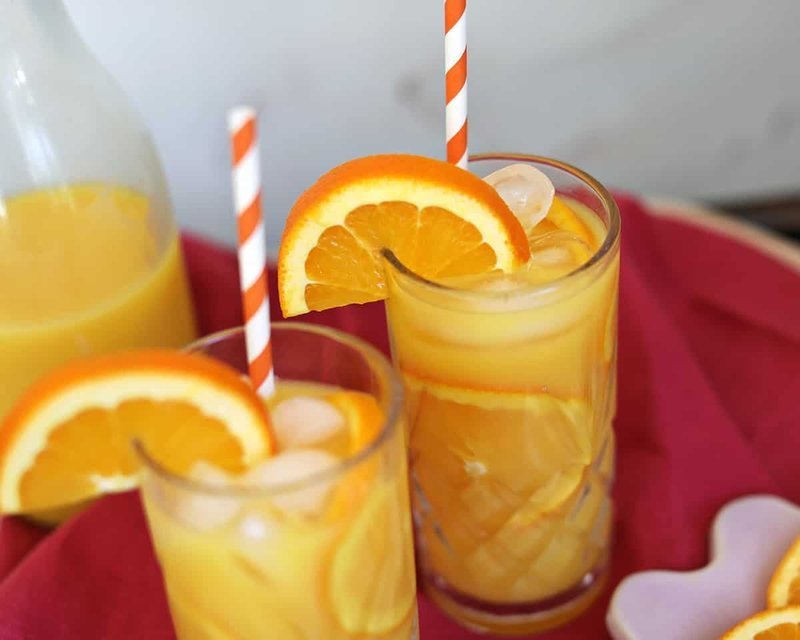
    Fill a tall glass with ice. Pour in the vodka — 2 ounces (60 ml). Top with orange juice, about 5 ounces (150 ml). Give it a good stir, add a thin orange slice if you’re feeling decorative, and serve it right away. The ice holds the slice in place better than I expected it to.

    That’s the whole method. Two minutes, start to finish.

    Ways I’ve made it my own

    Once the ratio clicks, it’s easy to bend the drink a little:

    • Flavored vodka. Citrus or cherry is a good place to start. Vanilla leans into something sweeter — if you grew up on creamsicles, you’ll know what I mean.
    • A little sweetness. A splash of grenadine or simple syrup. Start small — half an ounce (15 ml) — and taste before you add more.
    • Lighter version. Half orange juice, half club soda or ginger ale. Same flavor, less of it, and it lasts longer on a hot day.
    • Not into orange? Swap in cranberry, mango, or pineapple juice. All three work. I’ve tried them; I’m not a scientist, just a person with a glass.
    Finished screwdriver drinks garnished with orange slices and striped straws

    Where the name comes from (probably)

    The honest answer is nobody knows. One story has it going back to the World War II era, when soldiers who couldn’t get their hands on whiskey mixed whatever spirit they could find with orange juice to make it drinkable. Another says American auto workers were adding vodka to their OJ on the job and stirring it with a screwdriver, because of course they were.

    What’s less debatable is that by the 1950s and ’60s vodka was catching on in the U.S., and brands like Smirnoff started putting the screwdriver in their ads to push it along. Fifty years later, the trick still works — it’s one of the most recognized cocktails there is.

    Questions I actually get asked

    Is a screwdriver just vodka and orange juice? Yes. A shot of vodka into a glass of orange juice with ice. It’s the easiest cocktail there is to learn, which is exactly why the ratio matters.

    What’s the difference between this and a Fuzzy Navel? The juice swap. A Fuzzy Navel uses peach schnapps instead of vodka. Same shape, different drink.

    Do I need expensive vodka? No — and this is the one place I’d actually save money. The orange juice swallows most of what makes a premium vodka special. A quality mid-priced bottle, like Grey Goose, Tito’s, or Smirnoff, is more than enough. Spend up on the juice instead.

    A note from Nora

    The first time I made one of these, I poured from the vodka bottle by eye, the way I pour everything, and ended up with something that needed a second glass of juice to survive it. Sam, being the supportive husband, drank it anyway. That was my Tuesday test failure — and it taught me the only lesson this drink has to teach: measure, then pour.

    It’s not a fancy cocktail. But on an ordinary night, when the kitchen is still warm and the week is finally done, it’s exactly the right amount of something. If I can make it on a Tuesday, it’s a keeper.

    Keep Reading

  • Cosmopolitan Cocktail Recipe: 5 Minutes, One Shaker, Zero Fussy Tools

    Cosmopolitan Cocktail Recipe: 5 Minutes, One Shaker, Zero Fussy Tools

    One Saturday, Sam was grading papers at the kitchen table, my daughter was doing her best impression of a dog on the floor, and Biscuit was, well, being Biscuit — and three of us had just said the same thing within a minute of each other: we need a Cosmo.

    Not the skinny martini kind. The 90s kind — the pink, tart, faintly decadent one that got famous in HBO’s Sex and the City. I’d been meaning to make one for ages, and it turns out the whole recipe fits on one index card: vodka, orange liqueur, cranberry juice, lime juice. Four things. One shaker. I’d call that passing the Tuesday test before we even started.

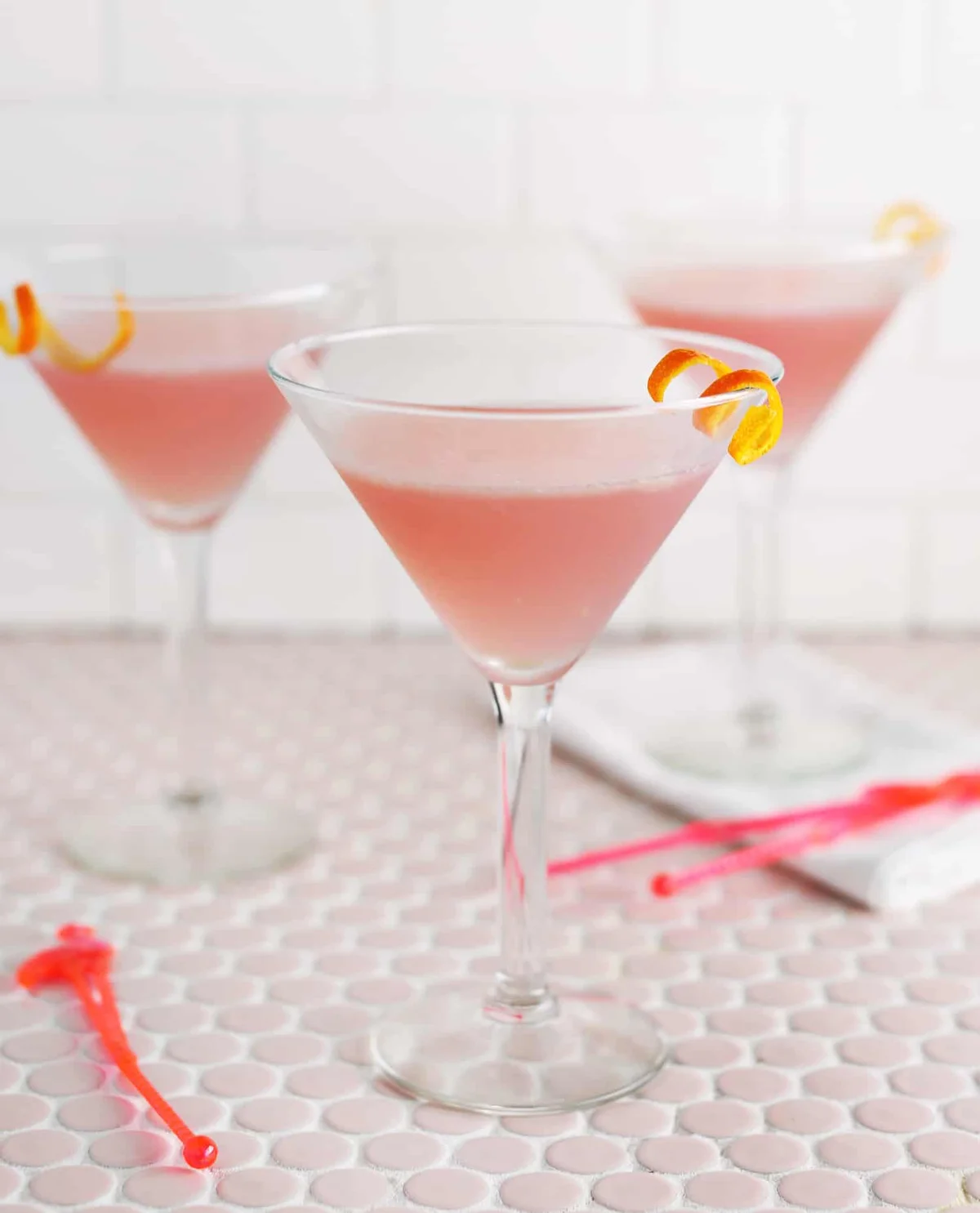
    Three pink Cosmopolitan cocktails with orange peel twists in martini glasses

    A little Cosmopolitan history (the short version)

    The Cosmo we know didn’t start out pink at all. Its ancestor is a 1930s cocktail called the Cosmopolitan 1934, made with gin, Cointreau, lemon juice, and raspberry syrup.

    Then, around 1985, a Miami bartender named Cheryl Cook — working at a South Beach bar called The Strand — is credited with remixing it as a Kamikaze variation with a splash of cranberry juice added. Others trace it to Dale DeGroff at New York’s Rainbow Room, and still others to bartender Toby Cecchini in the late 1980s, who mixed his version with citrus vodka, cranberry juice, orange liqueur, and lime juice. Which origin is “right” is genuinely up for debate — but thanks to Carrie Bradshaw in the 1990s, the pink version won, and it’s been a staple ever since.

    Pink Cosmopolitan cocktail in a stemmed martini glass on pink tile

    What you need

    Everything here is standard stuff — no special bar gear required.

    • Vodka. Unflavored or citrus-flavored. Use whatever brand you like; for a top-shelf option I’d go with something like Grey Goose.
    • Orange liqueur — Cointreau, triple sec, or Grand Marnier all work.
    • Cranberry juice cocktail, not 100% juice. The 100% version turns the drink sharp and sour in a way that’s hard to fix.
    • Lime juice, freshly squeezed. This is the one ingredient I wouldn’t sub.
    • Orange peel, optional, for the garnish — but stay for the twist trick below, it’s worth it.

    How to make a Cosmopolitan

    One cocktail. About 5 minutes start to finish — 4 to prep, 1 to shake and pour.

    Ingredients:

    • 2 oz vodka (59 mL)
    • 1 oz Cointreau or orange liqueur (30 mL)
    • 1 oz cranberry juice (30 mL)
    • ½ oz fresh lime juice (15 mL)
    • orange peel, for garnish

    Steps:

    1. Into a cocktail shaker filled with ice, add the vodka, orange liqueur, cranberry juice, and lime juice.
    2. Shake until the shaker feels properly cold in your hands — about 10–15 seconds.
    3. Strain into a chilled martini glass or coupe, and finish with a curl of orange peel.
    Cosmopolitan cocktail ready to serve beside fresh citrus garnish

    The orange twist, no fancy tools

    Here’s how I make those little orange spirals you see in cocktail photos — and I promise it takes no fancy equipment. Scrape off a wide strip of peel with a potato peeler (a fancy peeler works too, if you have one), then use kitchen shears to cut it into a thin strip and let it curl. It curls on its own, which feels almost unfair.

    Kitchen shears, peeler, and curled orange peel strips for the garnish

    Tips that actually help

    Chill the glass. A cold glass elevates any cocktail. Pop your serving glass in the freezer for 30 minutes to 2 hours before you pour.

    Too stiff? The classic cosmo is fairly spirit-forward. If it’s drier than you like, add ½ to 1 oz of simple syrup to the shaker before shaking.

    Want a White Cosmo? Swap St-Germain in place of the orange liqueur and use white cranberry juice instead of red. It’s the pale, floral sibling of the classic, and it’s lovely.

    Finished Cosmopolitan cocktail in a stemmed glass with orange peel curl

    Two quick answers

    What’s in a Cosmopolitan? Vodka, orange liqueur (Cointreau works), cranberry juice cocktail, and fresh lime juice. That’s the whole drink.

    How is it different from a vodka cranberry? A cosmo is a stiff, spirit-forward cocktail served in a martini or coupe glass. A vodka cranberry is juice-forward and served over ice in a tall glass. Both use vodka and cranberry — then they part ways completely.

    If you’re in cranberry territory anyway, a Cape Codder (vodka cranberry), a Sea Breeze, or a cranberry mimosa are all in the same family. And if you want to branch out into classics, the Manhattan, Aviation, Sidecar, and Old Fashioned are where I’d go next.

    A note from Nora: Sam tasted the first one, looked at me, and said it was “suspiciously good for a five-minute drink.” I took that as a win. If I can make it on a Tuesday, it’s a keeper — and this one makes itself before the kettle finishes cooling down.

    Keep Reading