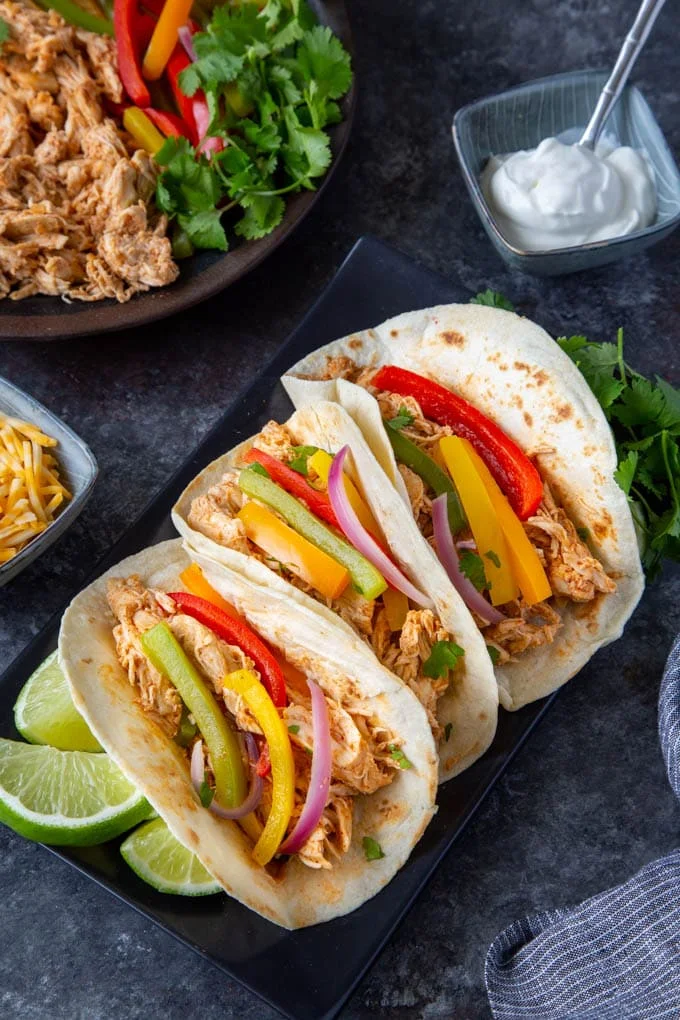
One Tuesday night last winter Sam got home from teaching early and found me staring into an almost-empty fridge like it owed me money. The only things that looked edible were a bag of bell peppers, an onion, and two chicken breasts I’d meant to cook three days ago.
That is how these Crockpot Chicken Fajitas usually start for me: with whatever the slow cooker can rescue before dinner time arrives.
Why this recipe works
I first made this dish years ago and it has been a repeat ever since. Five minutes of prep, four simple ingredients plus pantry spices, and then the slow cooker does all the heavy lifting. This one passed the Tuesday test without even trying.
Close your eyes for a second and picture the sizzling fajitas at a Mexican restaurant — spicy chicken, sweet peppers, soft onions. That is exactly what fills my kitchen when I walk in from whatever the day threw at me.
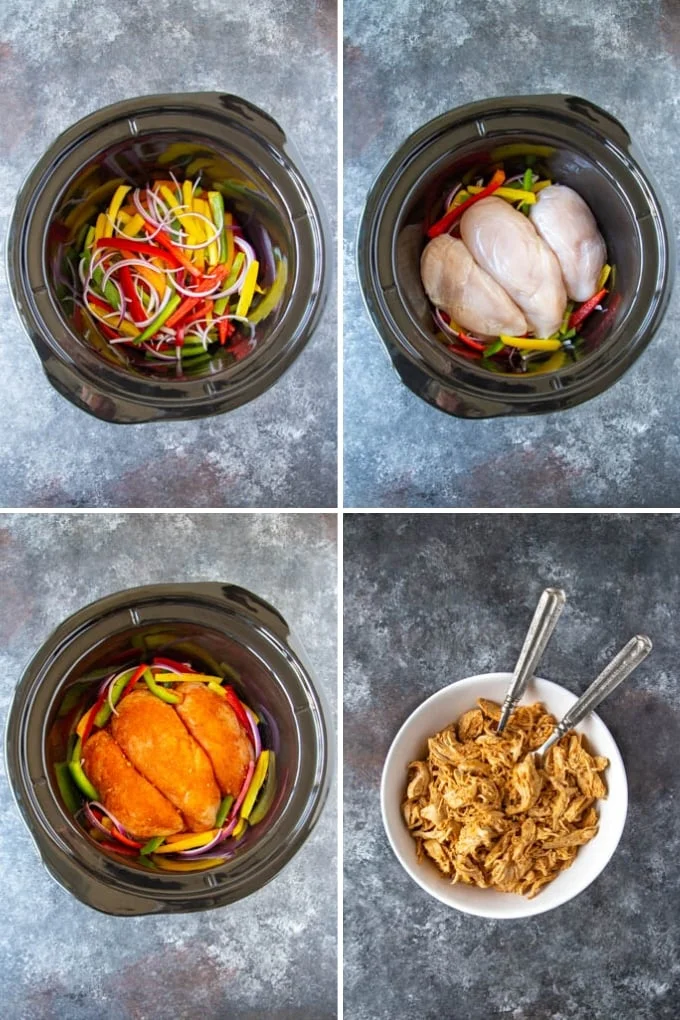
Slice the bell peppers and onion into ¼ inch (~6 mm) strips. This can be done ahead of time — I keep sliced veggies in zip-top bags in the fridge on busy days.
Place the peppers and onions at the bottom of the crockpot.
Pour in the chicken broth, layer the chicken breasts on top, and sprinkle with the seasoning. Cover and cook on high for 3–4 hours or low for 4–6 hours.
Remove the chicken and let it cool for a few minutes. Shred it with two forks (or slice into strips if you prefer) and mix it back in with the peppers and onions.
Serve over warm tortillas with your choice of toppings.
Homemade taco or fajita seasoning
If you do not keep a packet on hand, this blend takes about thirty seconds to throw together:
1 tablespoon chili powder
1 teaspoon cumin
½ teaspoon paprika
¼ teaspoon garlic powder
¼ teaspoon onion powder
¼ teaspoon red pepper flakes
1 teaspoon salt
1 teaspoon black pepper
Serving ideas and sides
We serve these in tortillas most nights, but they work just as well over rice or quinoa, tucked into a burrito bowl with beans and sliced avocado, or even atop chopped greens for a lighter version.
For sides, roasted corn, black beans, refried beans, or a quick watermelon salad all pair nicely. A squeeze of lime on top is the one thing I never skip.
A few tips from my kitchen
Crispier veggies. If you prefer your peppers to hold their shape, add them partway through cooking instead of at the beginning. Put onion, broth, chicken, and seasoning in the crockpot first, then layer the bell peppers on top about 15–30 minutes before serving.
Frozen chicken. I recommend thawing the chicken before slow cooking. The USDA says chicken needs to reach an internal temperature of 165°F (74°C) for safe consumption, and frozen chicken can spend too much time in the danger zone — that is the range between 40–140°F (4–60°C) where bacteria grow most rapidly. Thawing first keeps things on the safe side.
Tomatoes. Yes, you can add them. Use one 14 oz (~397 g) can of diced tomatoes and omit the chicken broth entirely.
If I can make it on a Tuesday, it is a keeper. And these fajitas are exactly that — simple enough for a night when everything feels slightly behind schedule, but still worth setting the table for.
A note from Nora: The first time I made this recipe I forgot to add any seasoning at all and discovered my mistake only after shredding what amounted to very mild chicken. Sam was diplomatic. Our daughter just smiled, which she always does, so it did not help much. Since then the spice packet lives right next to the slow cooker — no more forgetting.
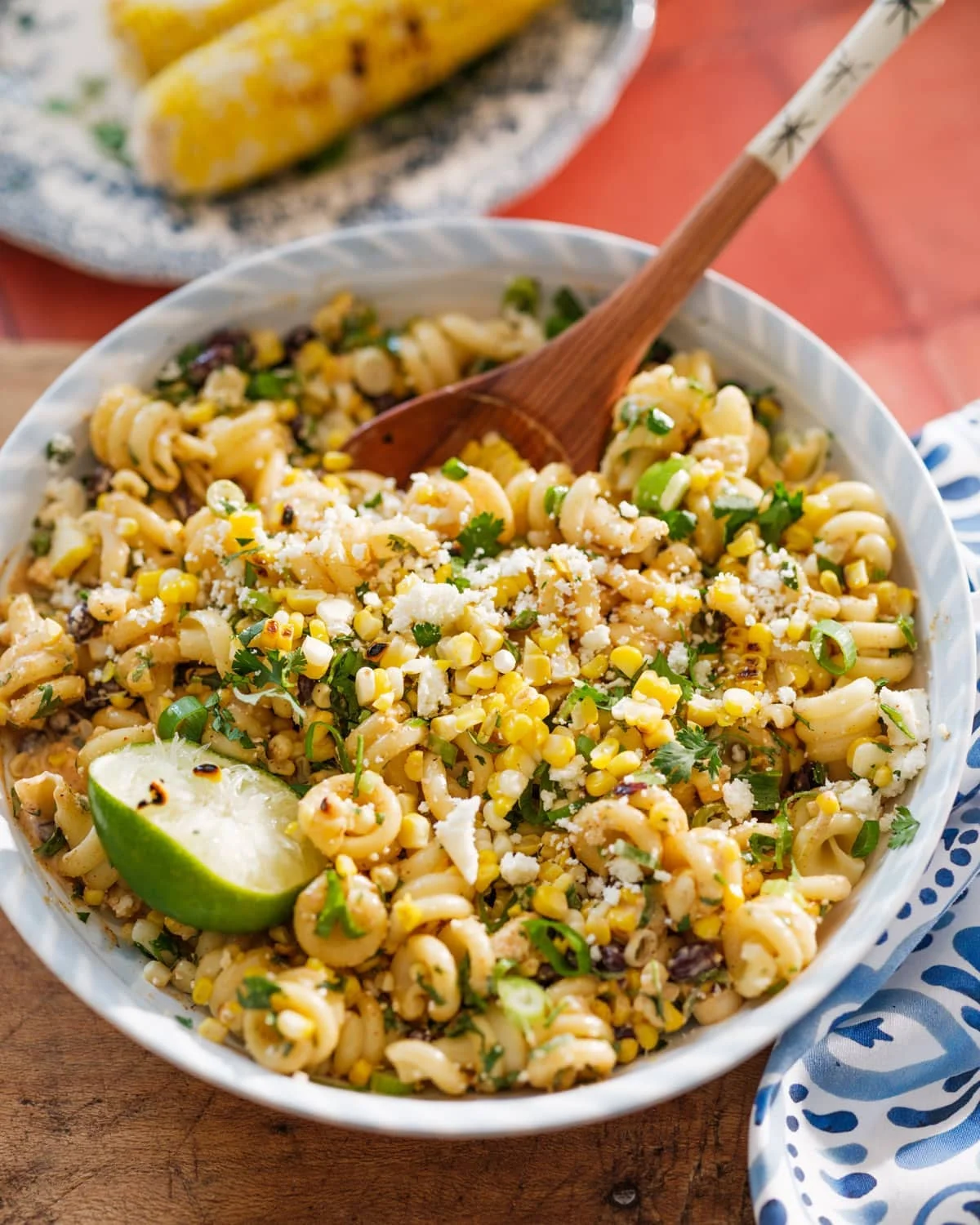
There is something about the middle of July when the grill stops being optional and starts feeling like a commitment. I had corn on the cob cooling on the counter, still warm from the grates, and it hit me: elote would make an incredible pasta salad.
I threw together a bowl that night. Sam took one bite and said “Wow.” That has always been my barometer for success in this kitchen.
Why This Recipe Works
The smoky char from grilled corn, bright lime, a touch of chili powder and cumin, and that salty crumbled cotija — it all layers into something that feels special without any complicated technique. It is veggie-forward, too: more vegetables than pasta, and just enough mayo in the dressing to coat everything without weighing it down.
This one passed the Tuesday test, and it has become my go-to for potlucks and barbecues all season long.
What You Will Need
The full quantities are in the recipe card below. Here is why I chose each ingredient:
Bowtie, cavatappi, or fusilli pasta — Short shapes with ridges and twists catch the dressing better than long noodles. A fun shape also makes the salad feel more interesting on the plate.
Fresh corn on the cob — Grilling gives it that charred flavor you cannot fake. Frozen or canned works in a pinch, but fresh is worth it.
Black beans — Not traditional elote territory, but they add fiber and extra vegetables to every forkful.
Green onions and cilantro — Fresh, bright finishing notes that lift everything.
Cotija or feta cheese — Cotija is a Mexican cheese: salty, crumbly, and essential. Feta works if you cannot find it.
The dressing — Just mayo, lime juice, chili powder, garlic powder, cumin, and salt. Simple, but it tastes homemade.
How to Cook the Corn
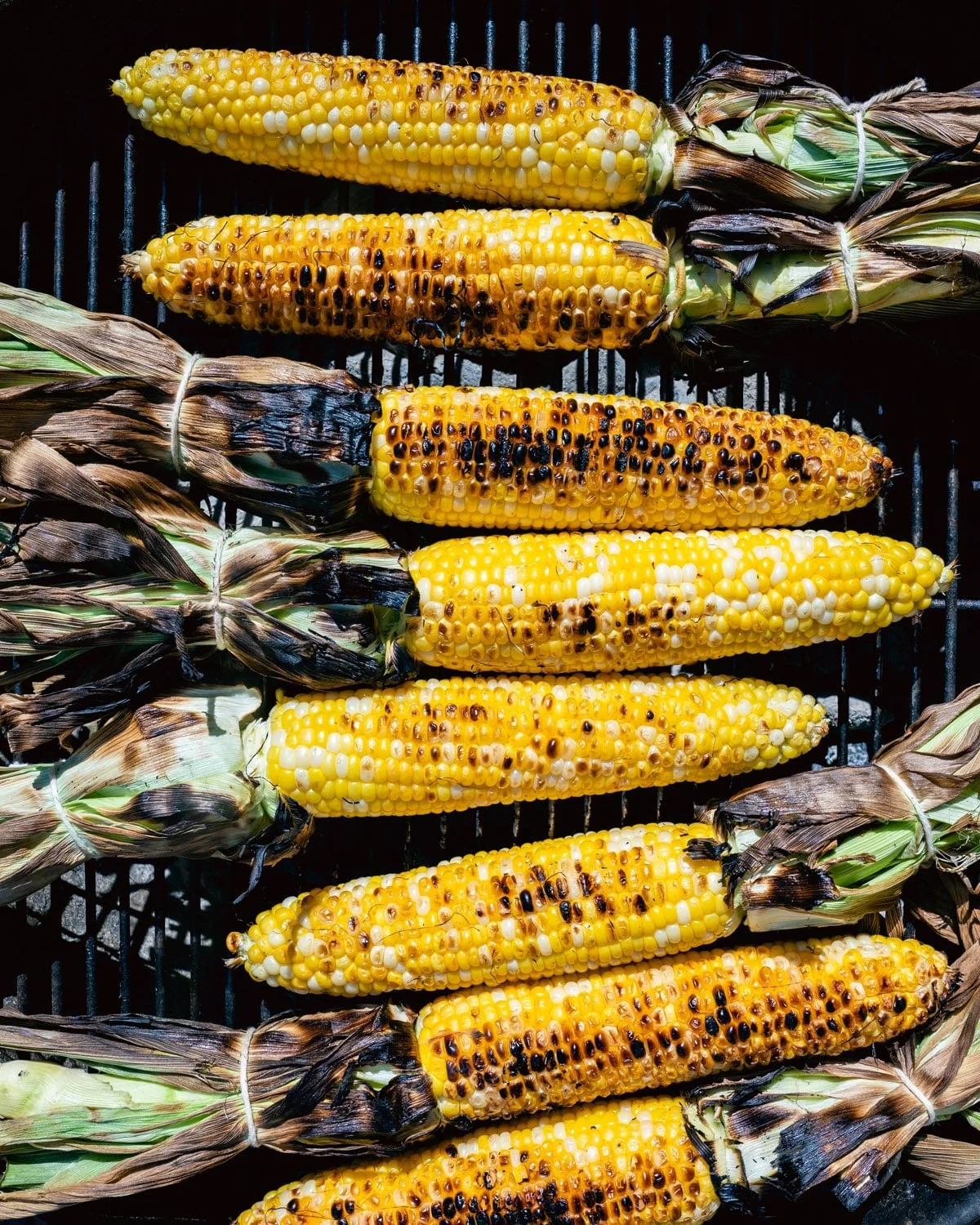
Do not skip the grill if you can help it. Mexican street corn is supposed to be charred — those slightly bitter, caramelized edges are exactly what makes elote taste like elote.
I shuck the corn, rub each cob with olive oil, and place them on medium-high grill grates for 12 to 15 minutes, turning until blackened on all sides. The grill should be at 375 to 450°F (about 190 to 230°C).
Without a grill? Sauté fresh, frozen, or canned corn kernels in butter or olive oil for a few minutes. It is not quite as deep-flavored, but it works.
Tips for the Best Pasta Salad
Cook the pasta to true al dente, or even a minute under. It firms up as it chills — you really do not want mushy noodles.
Rinse it cool. This is one of those times when rinsing pasta is actually correct. It stops the cooking and washes off excess starch.
Drain the beans well. Wet black beans will make a thinner dressing, so shake off as much liquid as you can.
Save a spoonful of cotija for the top so the finished bowl has visible cheese crumbles scattered across it.
Variations and Substitutions
If you want to mix things up, here are a few ideas:
Make it more filling: Add shredded grilled chicken, grilled shrimp, or diced avocado.
Make it spicy: Stir minced jalapeño into the dressing or add a pinch of chipotle chili powder.
Make it vegan: Use vegan mayo and dairy-free feta (or nutritional yeast) instead of cotija.
Swap the beans: Pinto beans work just as well as black beans.
What to Serve with It
This salad fits almost any summer table. I have served it alongside chicken burgers, grilled shrimp skewers, and my favorite grilled vegetables. A pitcher of margaritas or limeade makes the whole thing feel like a proper gathering. Tortilla chips with black bean hummus are another easy pairing.
Make Ahead and Storage
You can make this salad up to 1 day in advance and keep it refrigerated. I prefer to chill the dressing separately and fold it in right before serving — that way the pasta stays fresh-tasting. Leftovers last up to 3 days in the fridge. The pasta keeps absorbing dressing as it sits, so if things feel dry, just stir in a light spoonful of mayo or a squeeze of lime juice.
Dietary Notes
This salad is vegetarian and easily made vegan. For gluten-free, use your favorite GF or legume-based pasta and cook it slightly under the package directions — gluten-free pasta tends to soften even more as it chills.
½ teaspoon each garlic powder, cumin, and kosher salt
Instructions
Cook the corn. Heat a grill to medium-high (375 to 450°F / 190 to 230°C). Shuck the corn, rub with olive oil, and place on the grates. Cook for 12 to 15 minutes total, turning until blackened on all sides. Cut the kernels off the cob.
Cook the pasta. Bring a large pot of well-salted water to a boil. Cook the pasta until al dente per package directions. Drain and rinse under cool water until room temperature.
Make the dressing. Whisk together mayonnaise, lime juice, chili powder, garlic powder, cumin, and kosher salt in a medium bowl.
Assemble. In a large bowl, toss pasta, grilled corn, green onions, cilantro, black beans, cheese, and dressing until evenly coated. Taste and add more salt if needed. Serve topped with extra crumbled cheese.
A Note from Nora
The first time I made this salad, our daughter asked for seconds before she even finished her first bowl. That is about as high a compliment as we get in this house. Sometimes the simplest combinations — corn and pasta and a little bit of lime — are exactly what an ordinary weeknight needs.
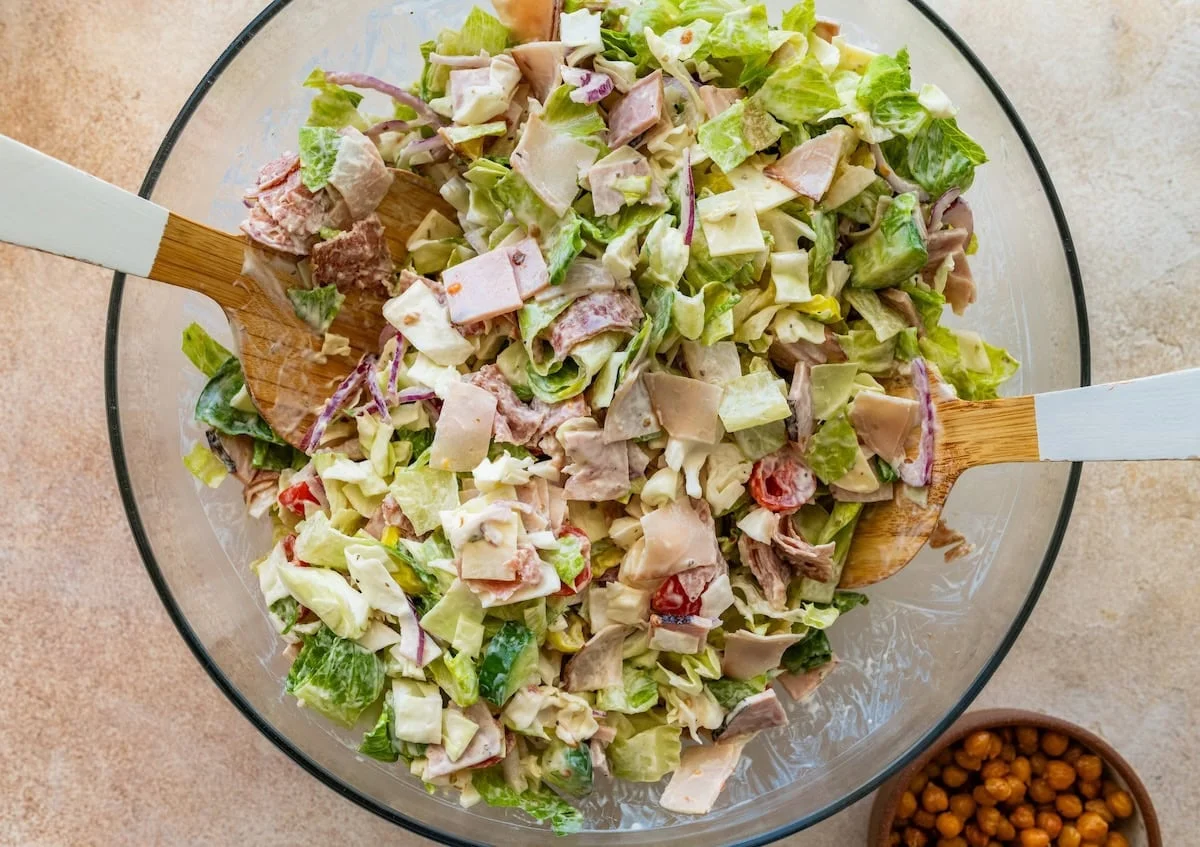
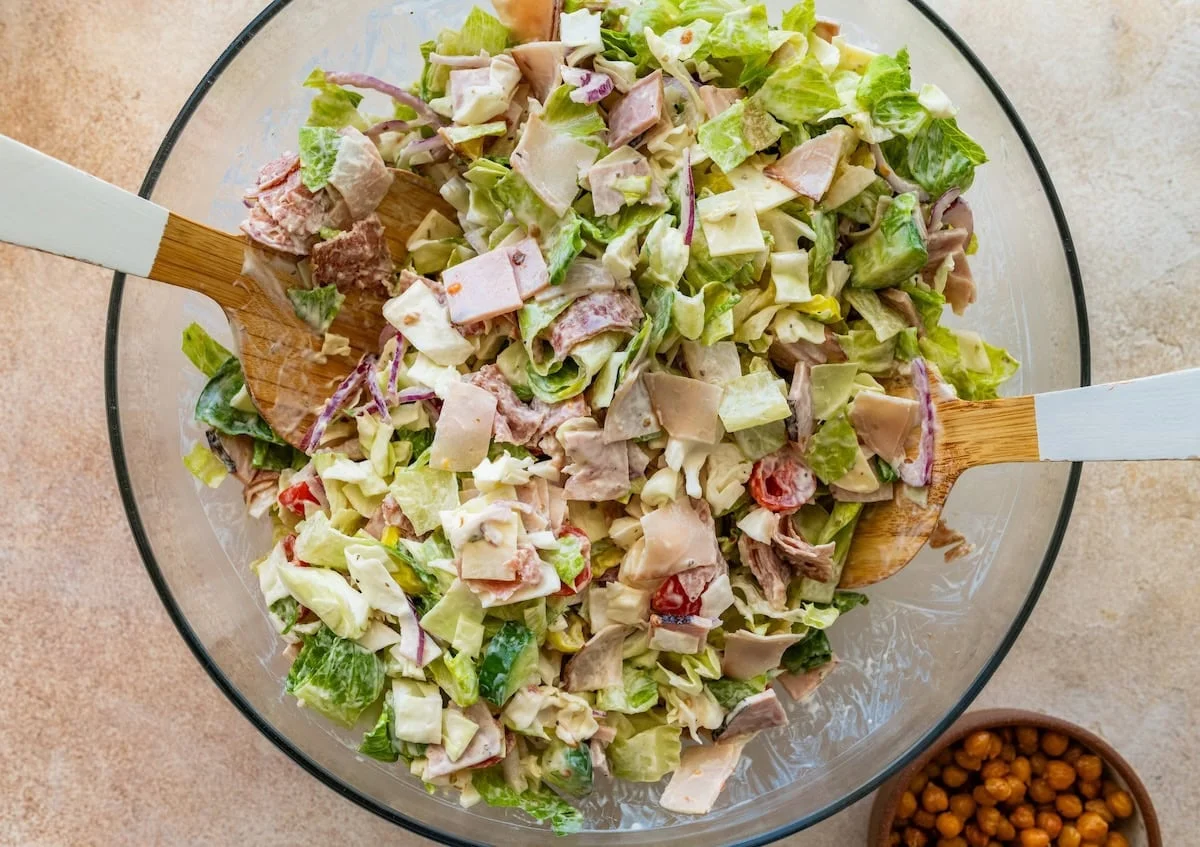
I was scrolling through my feed one evening last week when yet another photo of this grinder salad popped up — layers of deli meat, cheese, and crisp greens drowning in tangy dressing, served right out of a bowl instead of stuffed into a roll. If you are not from New England, “grinder” is just another word for an Italian sub or hoagie, but the concept makes sense everywhere: all those sandwich flavors without the bread.
It took me about three seconds to decide I needed this on my kitchen counter.
This one passed the Tuesday test. No cooking, no trips to the deli counter, just chopped-up leftovers from the fridge whisked together with a dressing that takes two minutes. Sam ate it for lunch and asked if we could keep a version of this in rotation all summer.
Why this works
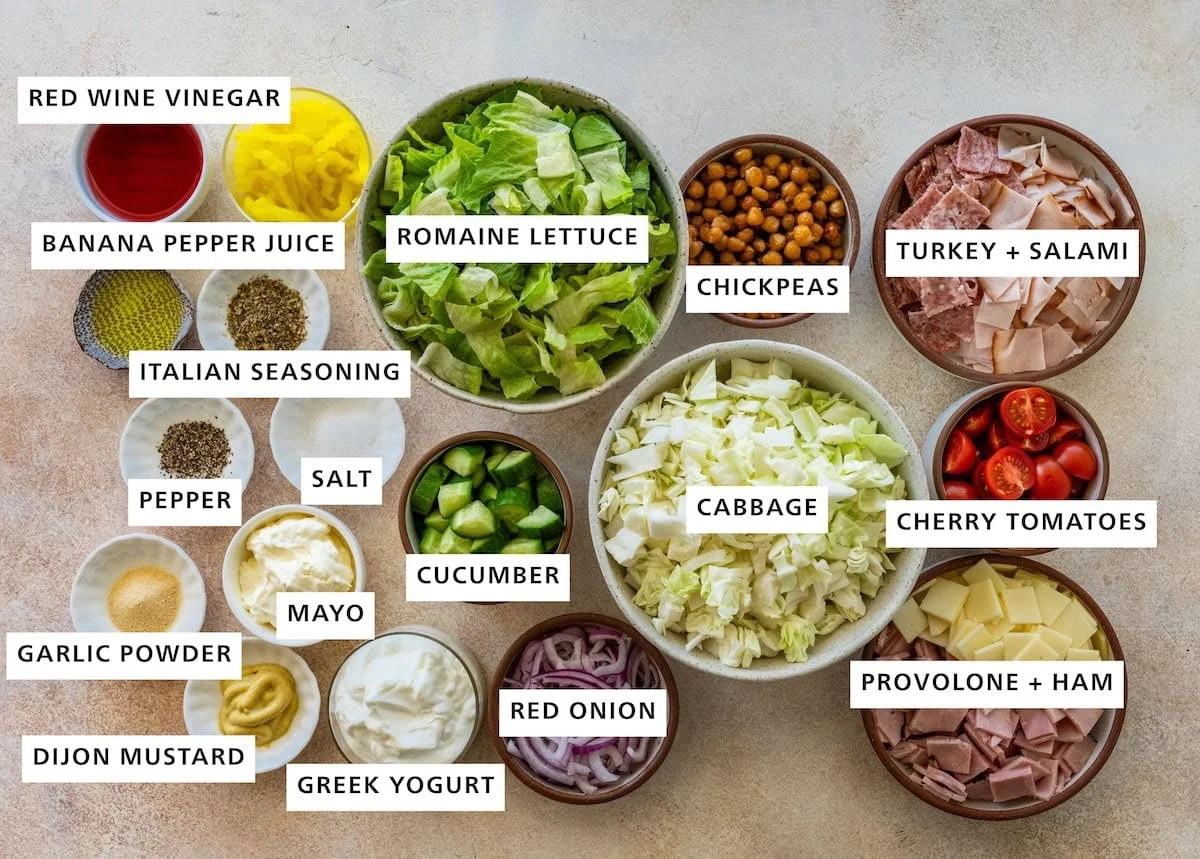
The trick is not the ingredients — they are straightforward: turkey, ham, salami, provolone, romaine, cabbage, cherry tomatoes, cucumber. The trick is the dressing and the crunch factor.
I use plain Greek yogurt as the base with just a touch of avocado oil mayo. Then red wine vinegar, Dijon mustard, Italian seasoning, and something that sounds odd but really anchors it — banana pepper juice. That tangy brine from the jar gives the whole salad that deli-counter brightness you cannot quite replicate with lemon alone.
And crispy roasted chickpeas on top for crunch. You can skip them or use croutons, but I keep a bag of Biena roasted chickpeas in the pantry and they disappear into this bowl faster than anything else in that bag.
The ingredients
Romaine lettuce — sturdy enough to hold dressing without turning soggy. That is why it makes the cut over iceberg here.
Green cabbage — adds extra bulk and a crunch that romaine alone cannot deliver. Together they make this salad feel substantial, not like a side dish pretending to be lunch.
Cherry tomatoes — halved, scattered through for bursts of sweetness against all the savory meat.
Cucumber — English cucumber works fine since you do not need to peel it. Keeps things light and fresh.
Banana peppers — this is non-negotiable in my book. They bring a mild heat and tang that makes the salad taste like an actual grinder instead of just chopped cold cuts on lettuce. And we use their brine in the dressing, so open the jar either way.
Deli meats — turkey for lean protein, ham for salty depth, salami for that bold slightly fatty bite you crave from a real Italian sub. Three ounces each is generous and makes this truly filling.
Provolone cheese — the traditional grinder cheese. It gets soft once dressed and adds just enough creaminess to balance all those sharp flavors.
Variations worth trying
This salad is forgiving, so treat it like building your own sub:
Different meats: Pepperoni, capicola, prosciutto, or roast beef all work. I have done a half-and-half of salami and pepperoni on a whim and loved it.
Cheese swaps: Fresh mozzarella, fontina, or shaved Parmesan are all delicious here. A mix of provolone and Parmesan is my personal favorite variation.
More veg: Bell peppers, black olives, roasted red peppers, artichoke hearts — pile on whatever you have in the crisper drawer.
Pasta version: Skip the romaine entirely and toss everything with cooked rotini for a grinder pasta salad. Travels even better to potlucks or school lunches.
How to make it
Whisk the dressing. In a small bowl, combine Greek yogurt, avocado oil mayo, red wine vinegar, banana pepper juice, Dijon mustard, Italian seasoning, garlic powder, salt, pepper, and crushed red pepper flakes if you like heat. Whisk until smooth. Taste it — adjust with more vinegar or salt if needed. It should be tangy enough to make your jaw tighten slightly.
Combine the salad base. In a large bowl, add chopped romaine, green cabbage, cherry tomatoes, cucumber, red onion, and banana peppers.
Add the meats and cheese. Chop everything into roughly the same size — this is the one step that genuinely matters. You want each bite to hit you with a bit of turkey, a bit of ham, a bit of salami, cheese, and veg. Otherwise it just feels random in your mouth.
Dress and toss. Pour the dressing over everything and toss really well until nothing is hiding dry at the bottom of the bowl.
Serve or chill. Eat it right away topped with crispy chickpeas, or let it sit in the fridge for 10 to 15 minutes first. The flavors meld together beautifully when they have time to talk to each other.
A few things I learned
Chop everything uniform. This is not optional if you want the salad to taste right. Bite-sized pieces of meat, cheese, and veg — all roughly the same size — make every forkful balanced instead of a guessing game.
Let it rest. If your schedule allows 10 or 15 minutes after tossing, put the bowl in the fridge. The dressing penetrates deeper and the whole thing tastes more cohesive.
Add crunch last. Crispy chickpeas or croutons go on right before serving. They soften fast once they touch that yogurt dressing, so keep them separate until you are ready to eat.
Storing leftovers
This keeps well in an airtight container for up to three days. The romaine and cabbage hold up better than most salad greens — this is one of the few salads I actually enjoy on day two or three if I made it for meal prep.
If you are planning ahead, store the dressing separately and toss right before serving. That keeps everything crisp all week long.
Questions
What is a grinder salad? It takes every ingredient from a classic Italian grinder sandwich — deli meats, provolone, peppers, tangy dressing — and serves them in a bowl instead of on bread. It went viral on TikTok because it is genuinely satisfying and comes together in minutes.
Can I put this back into a sandwich? Yes. Pile the dressed salad onto a toasted sub roll for the full experience. It is messy, but in the best possible way.
What deli meats work best? Turkey, ham, and salami give you that classic grinder combo. But pepperoni, capicola, or any Italian meat from your local deli works fine.
Can I make it without mayo? The dressing is mostly Greek yogurt with just two tablespoons of mayo. Swap those for extra yogurt if you want to skip it entirely — the dressing will be tangier but still delicious.
The recipe
Italian Grinder Salad
Prep time: 15 minutes | Serves: 4 | Protein: 25 g per serving
For the salad:
3 cups chopped romaine lettuce
3 cups chopped green cabbage
1 cup cherry tomatoes, halved
1 cup chopped cucumber
½ red onion, chopped
½ cup banana peppers, sliced
4 oz deli turkey, chopped
4 oz deli ham, chopped
2 oz salami, chopped
4 slices (about ½ cup) provolone cheese, chopped
½ cup crispy chickpeas or croutons, for topping
For the dressing:
½ cup plain Greek yogurt
2 tablespoons avocado oil mayonnaise
2 tablespoons red wine vinegar
1 teaspoon banana pepper juice (from the jar)
1 teaspoon Dijon mustard
1 teaspoon Italian seasoning
½ teaspoon garlic powder
¼ teaspoon salt
¼ teaspoon black pepper
¼ teaspoon crushed red pepper flakes, optional
Nutrition per serving: 357 calories | 20 g carbs | 25 g protein | 20 g fat | 6 g fiber | 1082 mg sodium
A note from Nora
Biscuit tried to convince me that the crispy chickpeas were meant for him, not for the salad. He got three before I moved the bowl out of reach and he gave up, which felt like a victory. This recipe has been showing up on our counter every other day since I made it — Sam started packing it for work lunches because “it does not taste sad at noon,” in his exact words. Small rituals that repeat themselves are usually the ones worth keeping.
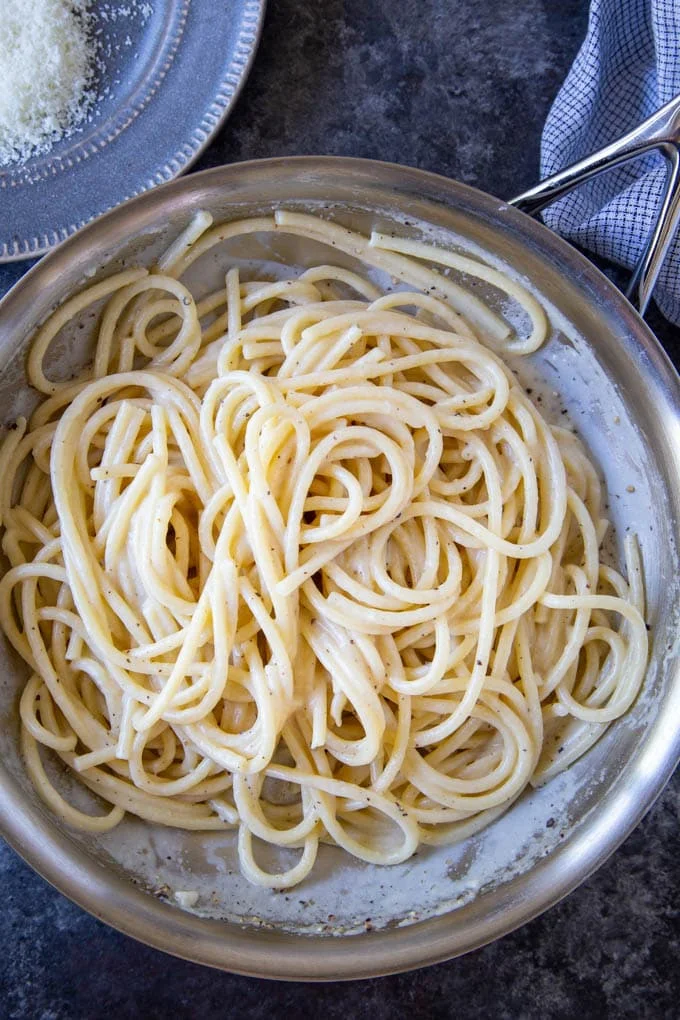
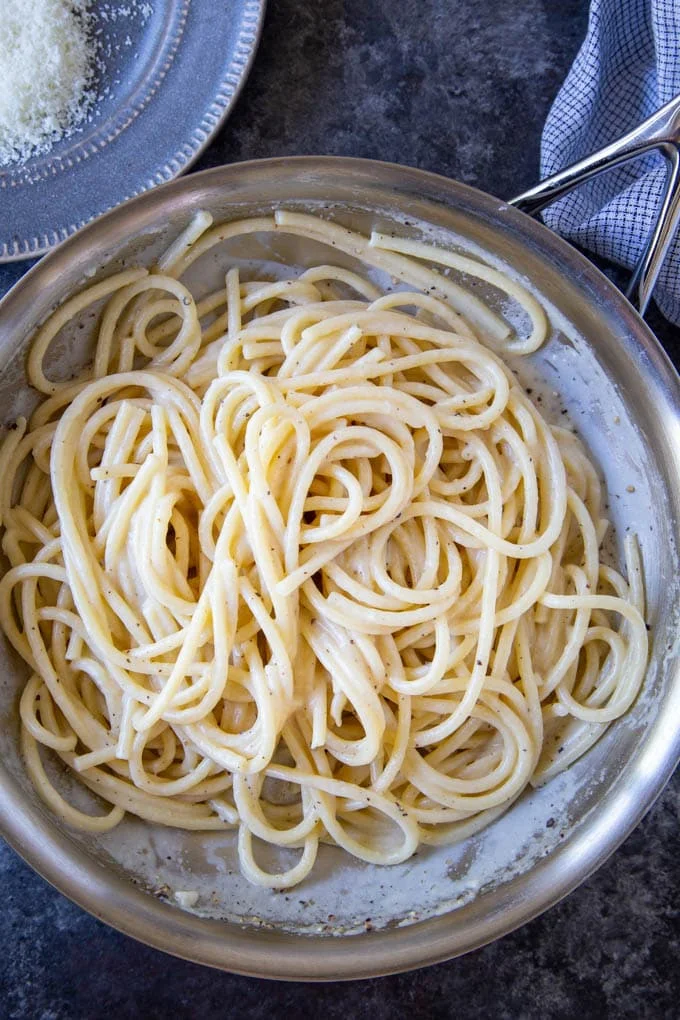
There is something about a dish that sounds fancy but takes almost no effort to make. Cacio e Pepe is exactly that kind of recipe — Roman, elegant, and built on only four ingredients.
I made this last week when I needed dinner on the table fast, and it came together in about 20 minutes from start to finish. Sam looked at his bowl, then at me, like he had just witnessed a small miracle. “There’s no cream in this,” he said. There really isn’t.
What is Cacio e Pepe?
Cacio means cheese in Italian — pronounced CAH-chee-oh — and e Pepe means and pepper. The original Roman version uses just three ingredients: pasta, cheese, and freshly cracked black pepper.
The magic comes from the technique. You reserve some of that starchy pasta cooking water and stir it into the pan with hot noodles and pepper before adding in the cheese. The Pecorino melts into a velvety sauce without any cream or butter needed — though I do add a little butter to mine, which I’ll get to.
How to Make It
This recipe comes together quickly, so having everything measured and ready before you start is key. Here’s the sequence that works:
Prep first. Grate the cheese. Crack the pepper — a grinder or mortar and pestle work best. Measure out the butter if using.
Cook the pasta. Bring 2 quarts of salted water to a boil in a large pot and cook bucatini until al dente per package directions.
Start the “sauce” while the pasta cooks. Melt butter with cracked pepper in a large saucepan over low heat. Remove from heat and set aside. (Skip this step if making it without butter — just add the pepper to the pan.)
About 3 minutes before the pasta is done, ladle roughly 1/2 cup of pasta water into the saucepan with butter and pepper. Return to low heat.
When there’s about 1 minute left on the pasta, reserve another 1/2 to 1 cup of pasta water, then drain the noodles. Add them to the pan with the warm butter-pepper mixture and previously added pasta water. Stir continuously until most of the water has evaporated — this is where your pasta finishes cooking.
Add the cheese off the heat. Remove the pan from the burner, add all the grated cheese, and stir constantly for 1-2 minutes until fully incorporated. If the sauce feels thick or clumpy, spoon in some reserved pasta water to loosen it. It should be creamy but not watery.
Serve immediately, with extra cheese and pepper on top if you like.
The Cheese Is the Star
Classic cacio e pepe calls for Pecorino Romano — a hard Italian cheese made from sheep’s milk. The word pecora means ewe in Italian, which is how you remember it. It has a sharp, tangy flavor that stands up to the black pepper beautifully.
If you can’t find Pecorino or prefer something milder, Parmesan works as a substitute. It’s made from cow’s milk and has a nuttier, gentler taste. Either way, grate it finely yourself rather than using pre-grated — freshly grated cheese melts far more smoothly into that silky sauce.
What About the Noodles?
The traditional Roman pasta for cacio e pepe is Tonnarelli — thick, square spaghetti made fresh. In the United States, bucatini is the closest easy-to-find option: it’s extra-thick spaghetti with a little hole running through the center, which helps catch that creamy sauce.
Can’t find bucatini? Regular spaghetti, linguine, or fettuccine all work fine.
To Butter or Not to Butter?
The classic Roman version doesn’t include butter. I added 2 tablespoons of unsalted butter because my family leans toward butter noodles and mac and cheese — the extra richness feels like a warm hug on a cold night.
You can absolutely leave it out if you want to stay true to tradition. Both versions are delicious.
Easy Variations
This recipe is simple enough that small additions change the whole dish without complicating things:
Add vegetables: peas, mushrooms, arugula, or spinach stir right in.
Making it gluten-free? Swap regular pasta for your favorite GF noodles.
Want some heat? A pinch of red pepper flakes does the trick.
Add protein: cooked shrimp, chicken, sausage, bacon, pancetta, or salmon all work well.
Finish with a flourish: a dollop of ricotta, a squeeze of lemon juice, or a splash of truffle oil on top.
The Tuesday Test
This one passed easily. Four ingredients. About 20 minutes total — 5 minutes prep and 15 minutes cook time. The only real trick is paying attention to the pasta water timing, but once you do it twice, your hands remember.
Ingredients (serves 4)
8 oz dried bucatini pasta (or spaghetti)
1 teaspoon coarsely ground black pepper
2 Tbsp unsalted butter (optional)
3/4 cup finely grated Pecorino Romano cheese, about 2 oz (Parmesan works too)
1 cup pasta water, divided and reserved while cooking
The first time I made cacio e pepe, the cheese clumped into little white islands and I panicked, thinking I’d ruined dinner. Then I remembered to add pasta water — just a few spoonfuls at a time — and stirred. Within seconds it turned silky. That’s the beauty of this dish: even your mistakes are easy to fix.
Maybe that is the real gift of simple recipes like this one: they do not demand perfection from you, only attention. And on busy nights, that feels more than enough.
I used to think I knew what made certain fried dishes special.
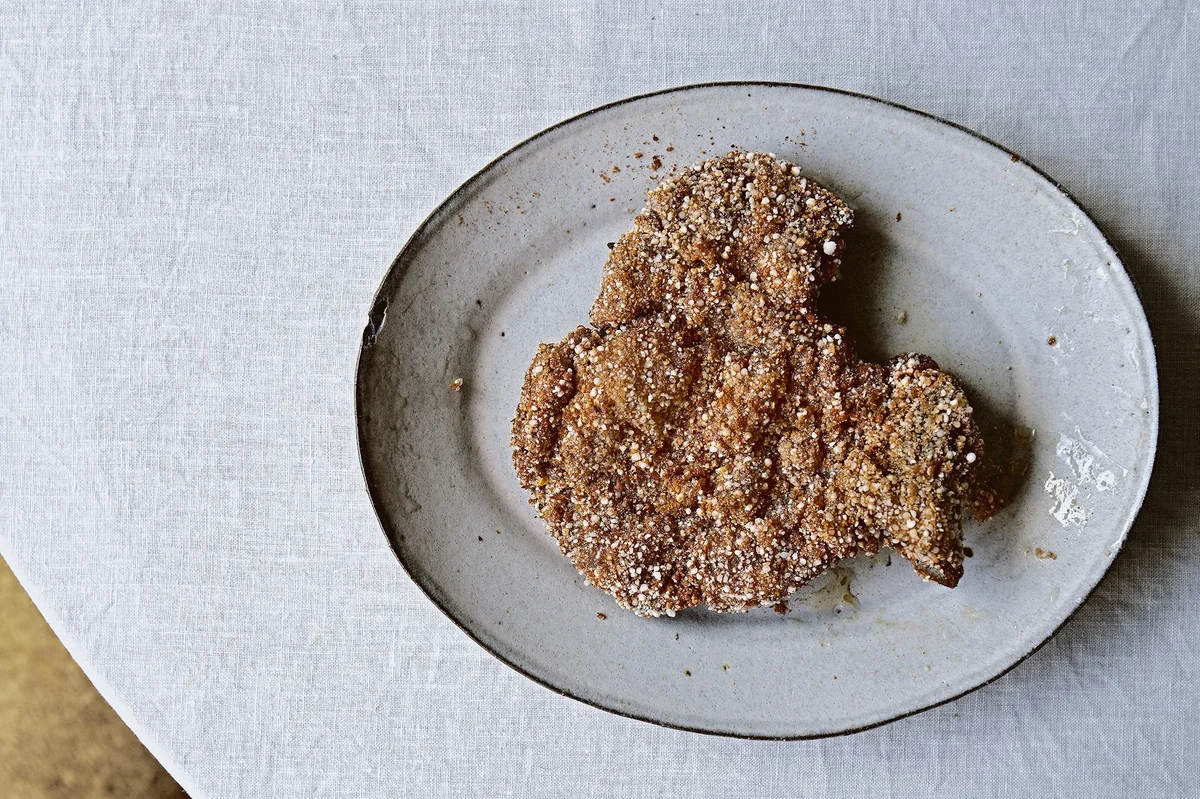
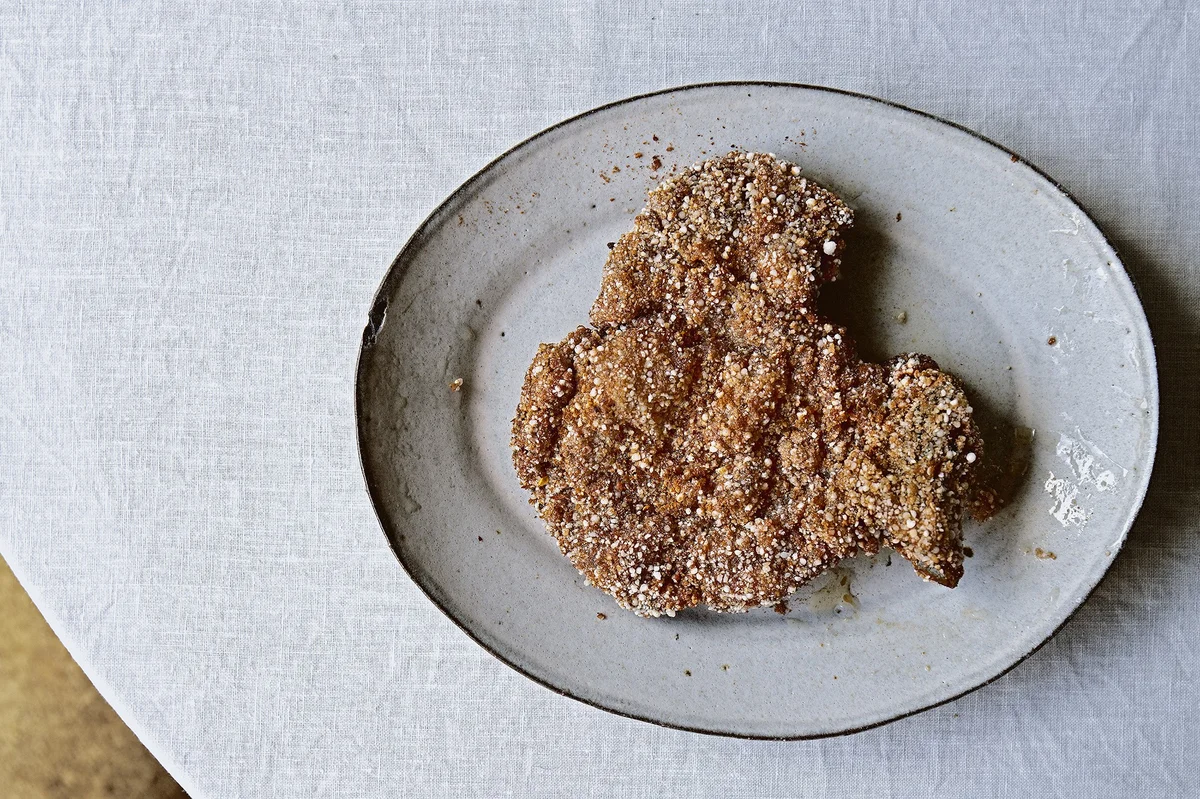
Not just crispy-on-the-outside special, but that particular kind of crunch where the crust looks almost glittery — those pale, uneven speckles that crackle a little louder than the rest. If you have ever had Taiwanese-style fried chicken poppers or pork chops, you know exactly what I mean.
For years I chased that texture without really knowing why mine never quite matched. Then one evening, staring at a bag of sago pearls in my pantry, something clicked.
The secret ingredient (and the hack)
Taiwanese fried food gets its signature crust from sweet potato starch — a grainy starch that fries up into those unmistakable pale granules. The problem? Sweet potato starch is nearly impossible to find outside of specialty Taiwanese stores. Most recipes, including ones I’ve written myself over the years, substitute tapioca starch or cornstarch instead. They work fine, but they lack those speckles entirely.
So here’s what changed everything: sago pearls are made from tapioca starch, and if you pulse them in a spice grinder for 8 to 10 times, they break down into something that looks almost identical to sweet potato starch. The same granules. The same crunch. And I can find sago pearls at my local Asian grocery without any trouble.
You’ll need a spice grinder — a food processor won’t break the pearls efficiently enough, and smashing them in a plastic bag is basically useless. These little things are tough. Pulse 8 to 10 times, then gently shake the grinder so the finer bits settle at the bottom while larger pieces rise. Check that no uncrushed pearls remain; the largest piece should be no bigger than one-third of an original pearl. If you skip this step, your crust can end up unpleasantly hard.
Once ground, store the crushed sago in a zip-lock bag until you’re ready to use it.
Cooking with crushed sago pearls
The crushed pearls work as a standalone coating or mixed partially with flour or cornmeal. I’ve used them for Taiwanese chicken popcorns, cutlets, fried calamari — anything where you want that starry, crackling crust.
Crushed sago pearl crusted pork chops
This recipe came together one weeknight when I needed something satisfying but not fussy. Four bone-in chops, a simple marinade, and the sago crust. It passed the Tuesday test easily.
Ingredients
Crushed sago pearl crust:
1 lb (450 g) small unflavored sago pearls
1 1/2 tsp garlic powder
1/2 tsp salt
1/2 tsp ground black pepper
Pork chops:
4 bone-in pork chops, each about 3/4 inch (2 cm) thick
1/4 cup soy sauce
1/4 cup water
1 crushed star anise
1 crushed garlic clove
1 tbsp rice wine
1 1/2 tsp granulated chicken bouillon
1 tsp light brown sugar
1/2 tsp ground black pepper
1/2 tsp ground Sichuan peppercorn
1/2 tsp salt
1/8 tsp curry powder
1/16 tsp ground cinnamon
Ground white pepper, to dust
Canola oil, for frying
Instructions
Make the crushed sago pearls. Place the sago pearls in a spice grinder (in batches if necessary). Pulse 8 to 10 times, then gently shake. Check that no uncrushed pearls remain — each piece should be no larger than one-third of an original pearl. If not, pulse a few more times and check again.
Marinate the pork chops. In a large container, mix together soy sauce, water, star anise, garlic, rice wine, chicken bouillon, light brown sugar, black pepper, Sichuan peppercorns, salt, curry powder, and ground cinnamon. Use the spiky side of a meat pounder to tenderize and slightly flatten each chop, then drench them in the marinade.
Coat the chops. Mix the crushed sago pearls with garlic powder, salt, and black pepper. Dust each marinated pork chop lightly with white pepper, then press into the sago coating until evenly covered.
Fry. Heat canola oil in a large skillet over medium heat. Fry the chops until golden brown and cooked through on both sides.
Serve with rice. The crust holds up beautifully even after resting.
A note from Nora
Sam came into the kitchen while these were frying and said, “Those smell like they belong somewhere I should visit.” Which is the highest compliment he gives to anything I cook. We ate them over rice on a Thursday that had no particular plans, and Biscuit sat by the counter looking deeply suspicious of crumbs falling to the floor.
Maybe that’s the thing about small kitchen discoveries — they don’t just change a dish. They turn an ordinary dinner into something that feels like a place you want to come back to.
The morning Sam carried the cooler out to the patio, I was already staring at a mental list that refused to stop growing. What if everyone wants something different? What if the potato salad turns to mush by three o’clock? What if I spend the entire holiday chained to the grill while my guests wander around with empty plates?
I used to let those questions run me in circles. Now I plan backwards from what I know works and build a menu that takes care of itself as much as possible. That is how you actually enjoy your own party.
Tips for keeping your 4th of July cookout smooth
Over the years, a few habits have made hosting feel less like managing a small restaurant and more like having friends over on a warm evening:
Bring meat to room temperature before cooking. Throwing cold steaks or chicken straight from the fridge onto hot coals makes the protein seize up and cook unevenly. I pull everything out about twenty minutes ahead so it sears properly and stays juicy inside.
Add BBQ sauce in the last five minutes. Most sauces — store-bought or homemade — carry enough sugar to burn fast over an open flame. Brushing on at the end gives you that caramelized glaze without the bitter, dark crust.
Keep cold dishes genuinely cold. I learned this the hard way after watching a beautiful potato salad soften into something sad by mid-afternoon. Now I fill a large shallow pan with ice and rest the serving bowls right on top. It works every time.
Set up a second table away from the grill. When condiments, buns, and drinks are all stacked next to where you’re flipping burgers, the whole zone becomes traffic chaos. A separate prep station on the other side of the yard keeps things moving.
The morning before — breakfast ideas
You need energy for a long day of hosting, so I keep breakfast simple but filling:
Fluffy pancakes. A mix of baking powder and baking soda gives them real height. The batter is thick enough that the pancakes stay soft inside instead of flattening into rubbery discs in the pan. This one passed the Tuesday test easily — I make a bigger batch on weekends and freeze extras between wax paper for busy mornings.
10-minute bagel burger. When I have hours of party prep ahead, this is what I reach for. It’s essentially an entire breakfast cooked into the hole of a bagel, so you skip washing multiple pans. Sam makes these for himself every time there’s a big day coming up — he says it saves him from standing in my way.
Appetizers and sides
These are the dishes that sit on the table quietly doing their job while the mains finish cooking:
Classic potato salad. Every cookout needs one, and I make mine with a balance of mayonnaise and mustard so it coats the potatoes evenly without turning watery or mushy. It actually improves overnight if you have the chance to chill it before serving.
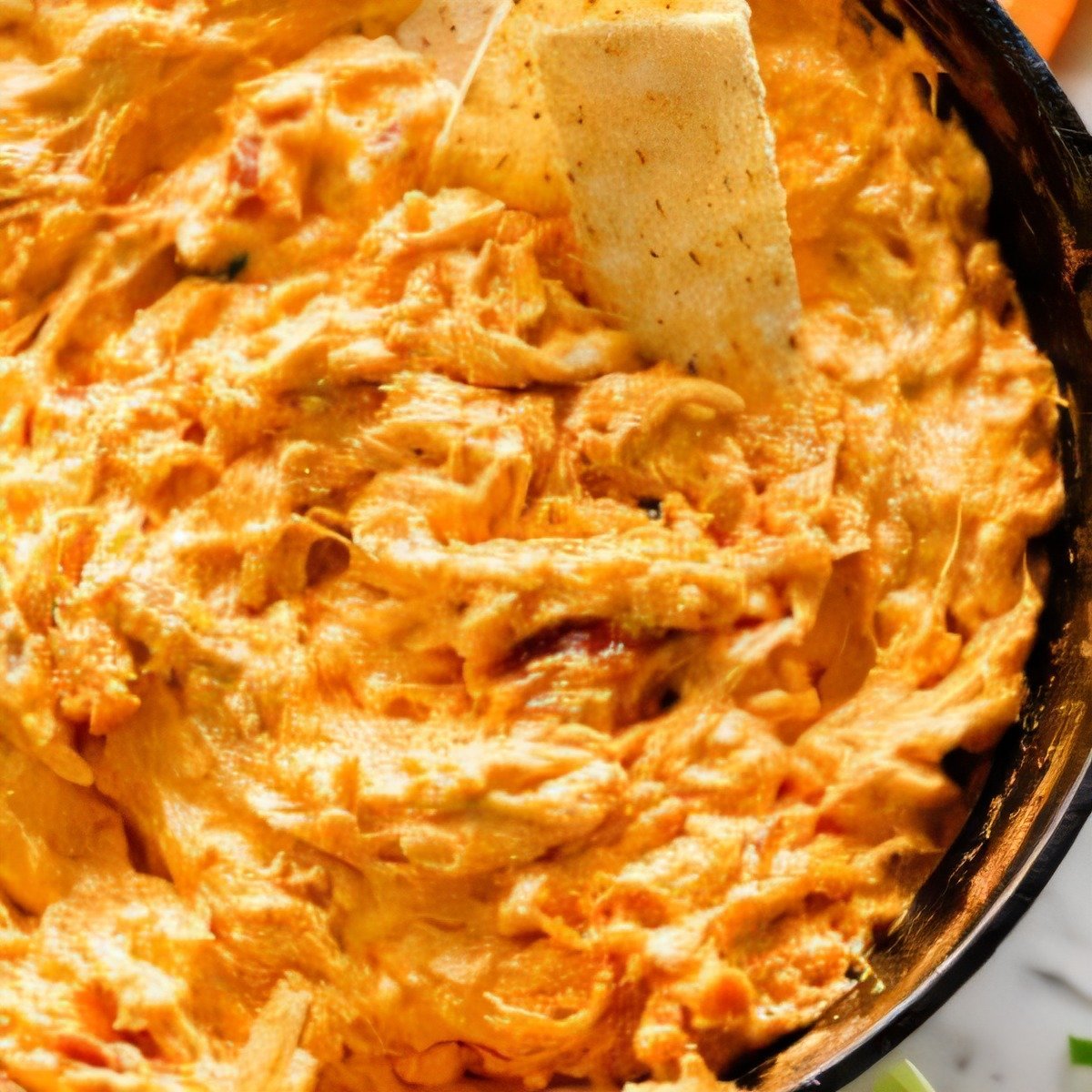
Buffalo chicken dip. I use shredded rotisserie chicken to save time, and a cream cheese base keeps it thick enough that it scoops up well with celery sticks or tortilla chips. Biscuit has learned to sit very politely when this comes out — mostly because the bowl is too high for him to reach.
Air fryer mozzarella sticks. Making these in the air fryer means you skip the mess and lingering smell of deep frying. The breading gets a proper crunch in just a few minutes, and they’re always gone fast.
Loaded baked potatoes. Set up a toppings bar and let your guests build their own — sour cream, chives, cheese, bacon bits. Baking them with an oil-and-salt rub gives the skins a nice texture that holds everything together.
The wings
Wings always disappear first at my house. Having different versions on the table keeps things interesting:
Classic buffalo wings. I bake these on a wire rack, which lets oven heat circulate underneath so the skin gets real crunch without needing a deep fryer. They’re straightforward and reliable — exactly what you want when there are twenty other things happening at once.
Garlic parmesan wings. Tossed in melted butter, garlic, and cheese right out of the oven. The residual heat melts the cheese instantly so it clings to every piece.
Lemon pepper wings. A dry rub that sticks well as they bake. The citrus cuts through the richness of the chicken in a way that feels lighter than any buffalo sauce — and on a hot day, that matters more than you’d expect.
Mains
A 4th of July table does not feel right without something substantial at its center:
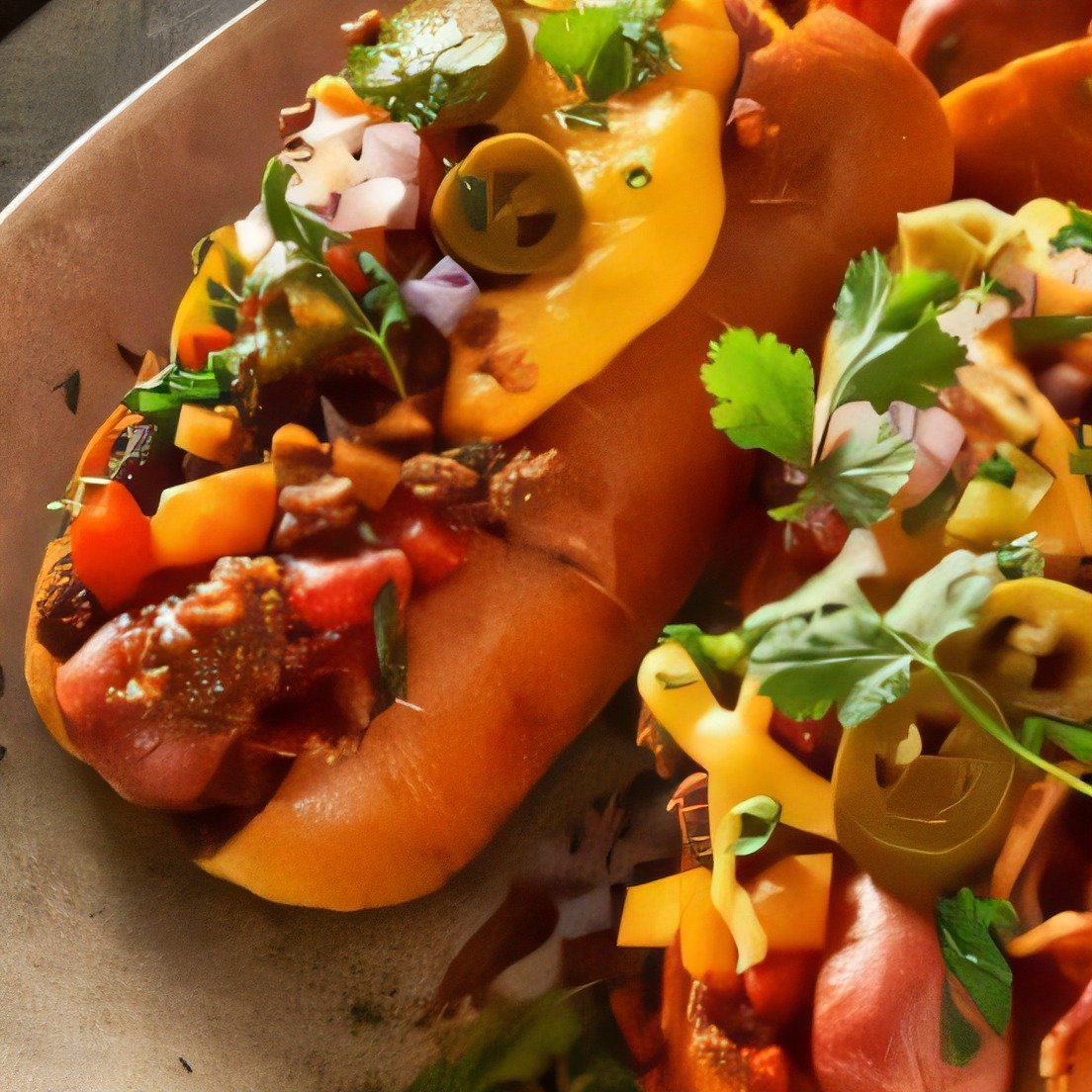
Chili dogs. You cannot have an Independence Day party without hot dogs. I top mine with a thick homemade chili that stays put on the bun instead of sliding off into your lap before you take the first bite.
Pan-seared garlic butter steak with mushroom cream sauce. If you’re hosting a smaller group and want to skip the outdoor grill entirely, searing this steak in a hot skillet builds a dark crust and the pan juices go straight into the mushroom sauce. It feels dressed-up enough for the occasion without requiring extra effort.
Crispy garlic herb roast chicken. Basting with garlic butter keeps the breast meat from drying out in the oven. A whole bird makes a great centerpiece when you’re dining indoors or under cover.
Baked pork chops. Pork chops can dry out fast if you’re not careful. I sear them in a hot skillet first to lock in juices, then finish in the oven with a thick layer of barbecue sauce. They come out incredibly tender.
Chili mac and cheese. Rich, loaded with flavor, and ideal for feeding a hungry crowd. Something this good means your guests will eat it straight from the serving dish — plates become entirely optional.
Tomato soup mac and cheese. A nice variation if you want more brightness to balance all those heavy grilled meats. The acidity cuts through in a way that keeps things interesting.
Classic mac and cheese. I make the sauce entirely on the stove, using freshly grated parmesan instead of pre-shredded. It keeps the cheese smooth and stops it from splitting — small difference, huge result.
Summer salads
Fresh salads are what keep a barbecue menu from feeling like one heavy note played all afternoon:
Macaroni salad. Cook the pasta just to al dente so it holds its shape when tossed. The dressing — mayonnaise, vinegar, and a touch of mustard — gives it a clean tangy finish that cuts through grilled meats perfectly.
Lemon herb Mediterranean pasta salad. If you want a mayo-free option, this is the one to make. Crisp cucumbers, tomatoes, and salty feta in a bright lemon-herb vinaigrette. It travels well and stays fresh on the table for hours.
Avocado tomato corn salad. This tastes like peak summer. Sweet tender corn kernels balanced with creamy diced avocado — zero actual cooking required. It adds real color to the spread, too.
Black-eyed pea and black bean salad. Mixing both beans keeps the texture interesting instead of mushy. Fresh lime juice and red wine vinegar in the dressing means the flavor stays sharp even after sitting out at the party for a while.
Desserts
It is not a 4th of July gathering without something sweet on the table:
Red velvet brownies. The deep red color fits right into the holiday theme, and they’re dense and fudgy in the center rather than cakey. I usually bake these the night before so the flavors have time to settle.
New York cheesecake. A classic with a creamy filling and an easy crust — probably the most straightforward cheesecake you can bring to any table. It holds up beautifully in the heat for at least an hour or two after coming out of the fridge.
A note from Nora
Last July, I spent the first three hours moving between the grill and the kitchen like a person running on pure anxiety. Then around four o’clock, our daughter sat down beside me with a glass of iced tea and said, "You look like you’re trying to run this party instead of being in it." She was right.
This year I’m going to let the potato salad sit on ice, trust the wings to bake without babysitting them, and actually watch the fireworks from my own patio. Maybe that is the real gift of a good menu — not that it feeds everyone, but that it gives you back your afternoon.
I stood in my kitchen last week staring at a freezer drawer full of mystery bags and a pantry shelf that definitely held something useful. It happened on a Thursday, which somehow always feels like the hardest night to figure out dinner.
It struck me: I already had enough for a really good meal. Most of us do. A few cans, some frozen chicken or shrimp, pasta, rice — these are the quiet heroes of Tuesday nights.
I put together fifteen recipes that rely on pantry and freezer basics. No last-minute runs to the store. No panic. Just honest food made from what you already own.
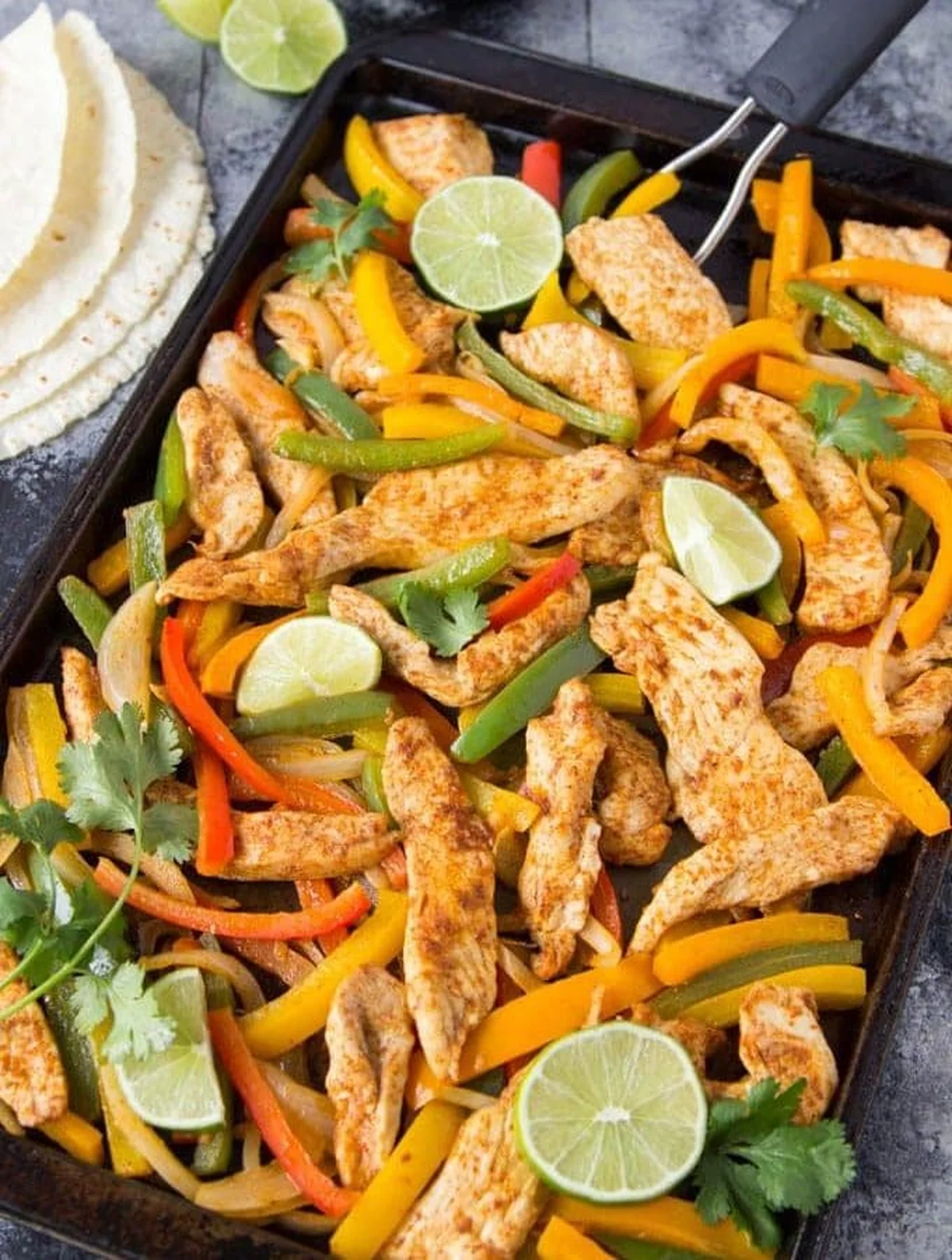
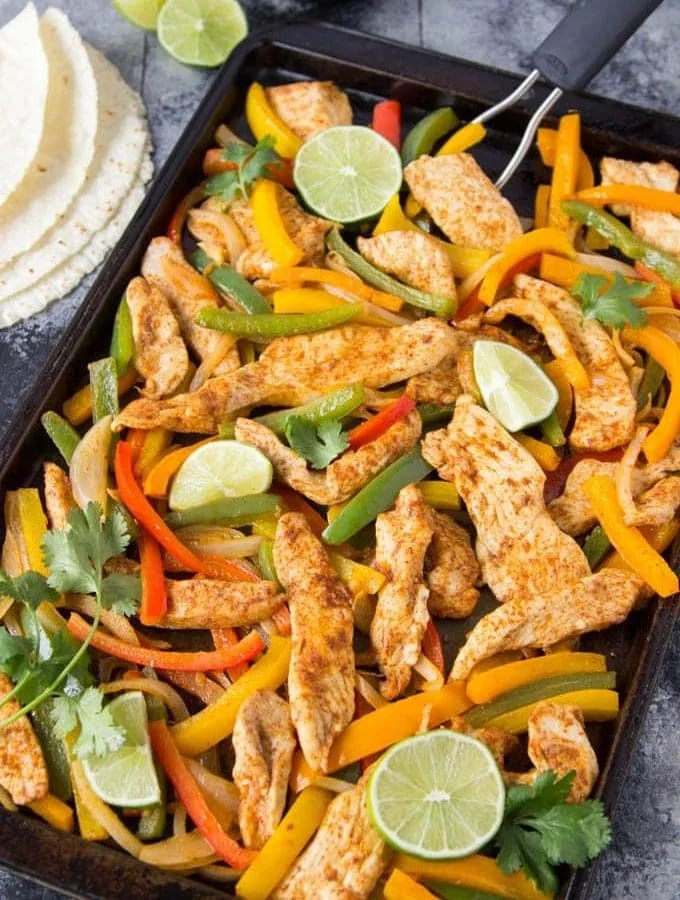
Sheet Pan Chicken Fajitas
This one passed the Tuesday test without any effort. Toss chicken and peppers on a single sheet pan, let the oven do its thing for about 20 minutes, and serve with tortillas and lime. If you are using frozen chicken or frozen peppers, just add a few extra minutes to the cook time.
What you need: Boneless skinless chicken breasts or tenders (fresh or frozen), bell peppers and onion (fresh or frozen), flour tortillas, lime.
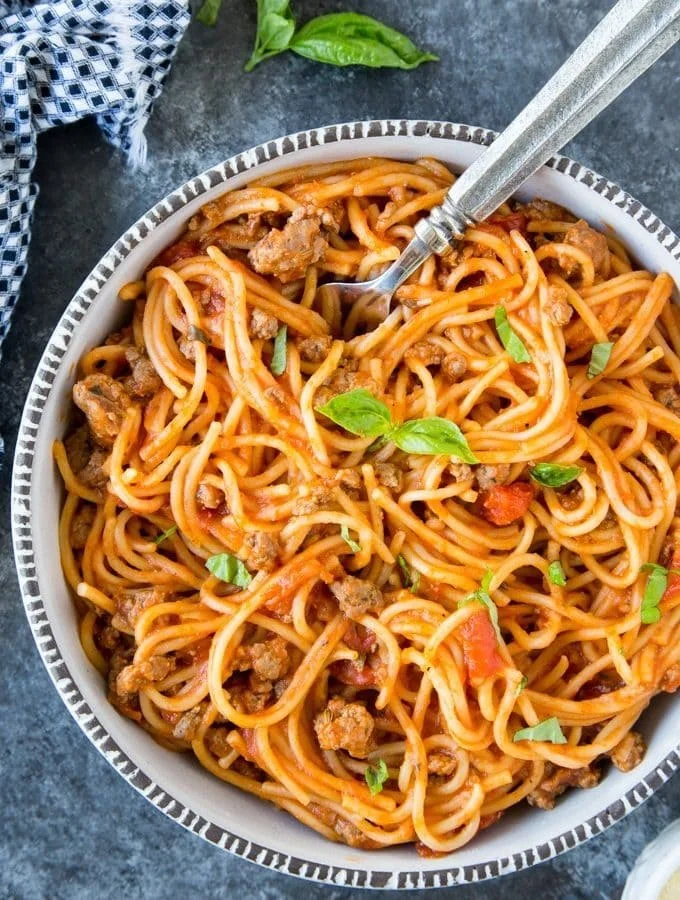
Instant Pot Spaghetti
An already simple meal gets even simpler when everything cooks in one pot. Brown the ground beef, add marinara sauce and diced tomatoes, drop in a package of spaghetti, and let the Instant Pot handle it. I pair this with frozen garlic bread on nearly every occasion.
What you need: Spaghetti, ground beef (fresh or frozen), jar of marinara sauce, canned diced tomatoes, Parmesan cheese if you have it, pantry spices.
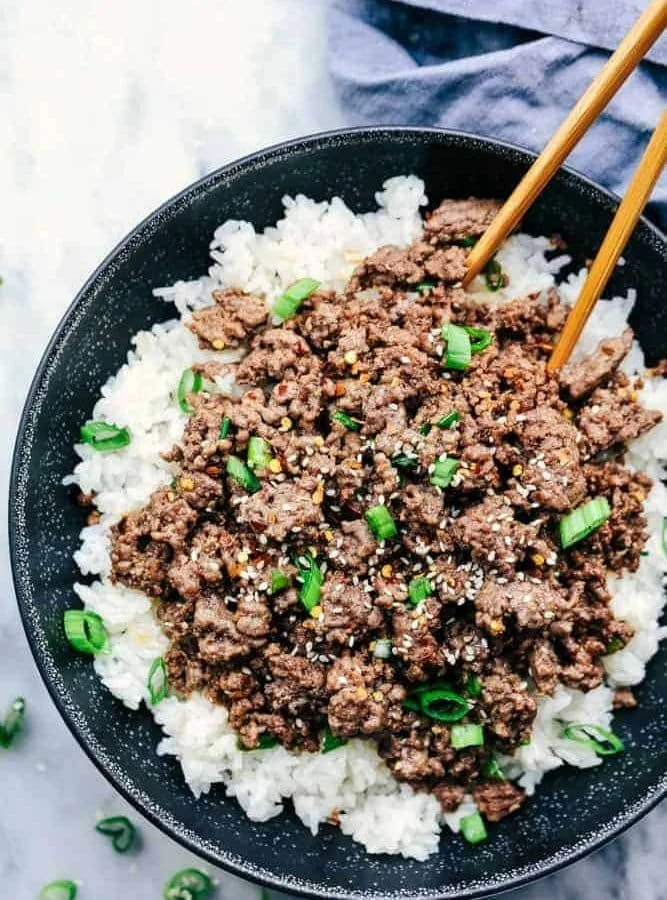
Korean Beef Bowls
Recipe and photo by Alyssa at The Recipe Critic. A package of ground beef plus soy sauce, sesame oil, garlic, brown sugar, and rice becomes something that tastes like it took actual effort. It is perfect for those 5 p.m. moments when dinner still feels miles away.
What you need: Ground beef (fresh or frozen), garlic, low-sodium soy sauce, sesame oil, brown sugar, pantry spices, rice.
Tip: Sub ground chicken or turkey if you prefer. Frozen microwaveable rice makes this about 15 minutes total.
Easy Roasted Veggie Tacos
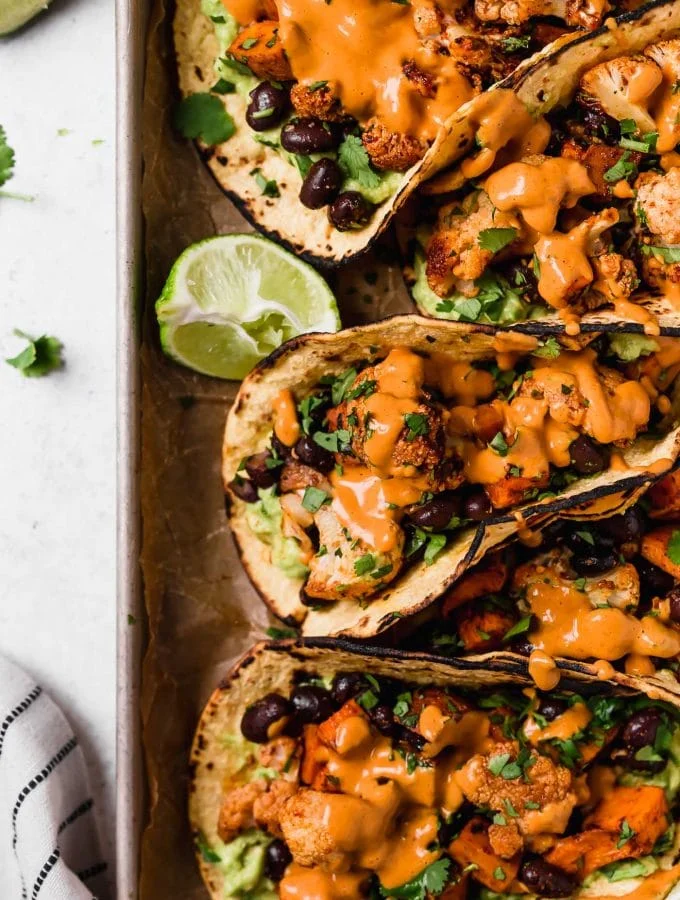
Recipe and photo by Jess at Plays Well With Butter. These are my go-to when I want something colorful without touching a piece of meat. Roasted cauliflower and sweet potatoes go into corn tortillas alongside black beans, then get topped with a chipotle lime cashew crema.
What you need: Cauliflower (fresh or frozen), sweet potato, avocado, canned black beans, canned chipotle peppers in adobo sauce — that spicy chile paste packed with the peppers themselves, cashews, lime, corn tortillas, pantry spices.
Tip: If using frozen cauliflower, do not thaw it first. Raise your oven to 450°F and follow the recipe as written. Frozen avocado pieces work in a pinch too — look near the frozen fruit section.
15-Minute Paprika Chicken
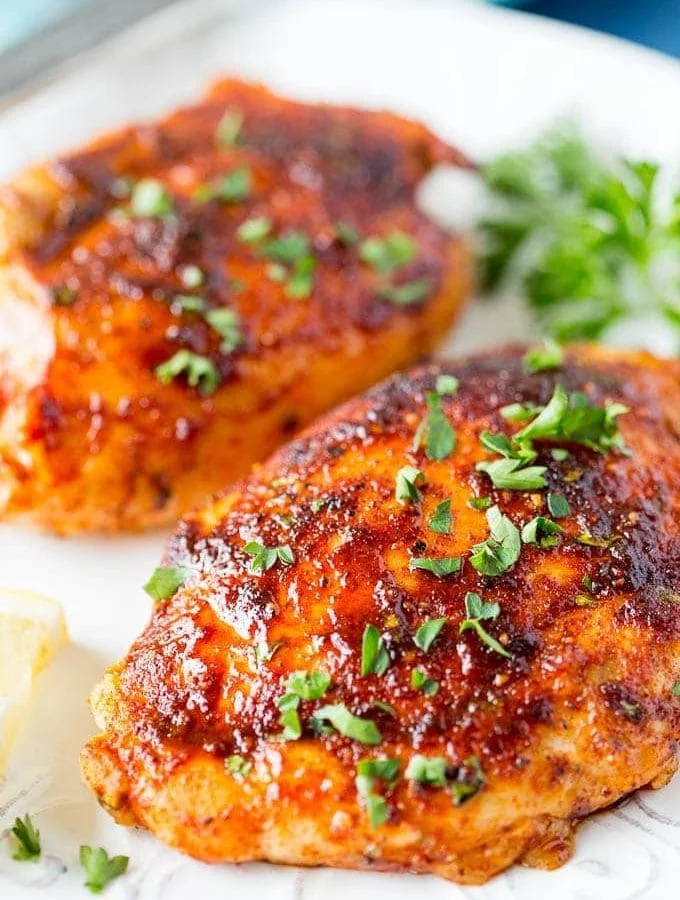
Boneless skinless chicken thighs rubbed with chili powder, garlic powder, smoked paprika, cumin, and red pepper flakes. Brush them with honey, then broil instead of bake — the high heat creates a crunchy outer crust while keeping everything juicy inside.
What you need: Boneless skinless chicken thighs (fresh or frozen), honey, pantry spices.
Serve over rice or alongside roasted potatoes and frozen green beans, peas, or corn.
Easy Shrimp Scampi
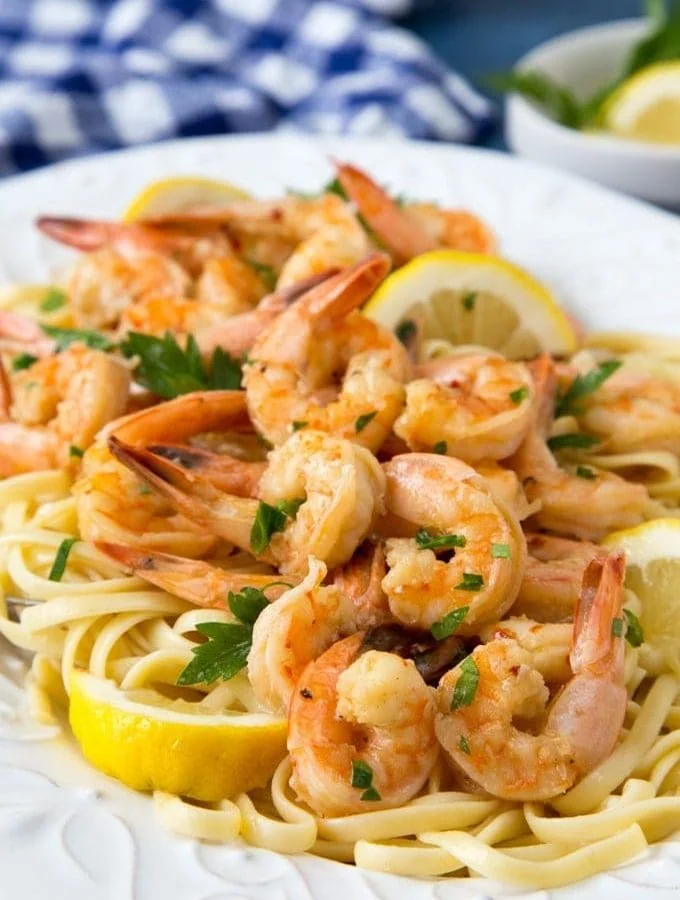
Fifteen minutes from freezer to table. Sauté shrimp in white wine, butter, garlic, and lemon, then serve over spaghetti or linguine. It sounds like restaurant food but it is genuinely one of the easiest things I cook.
What you need: Shrimp (fresh or frozen), spaghetti or linguine, lemon, butter, white wine (optional).
Sweet Potato & Black Bean Chili
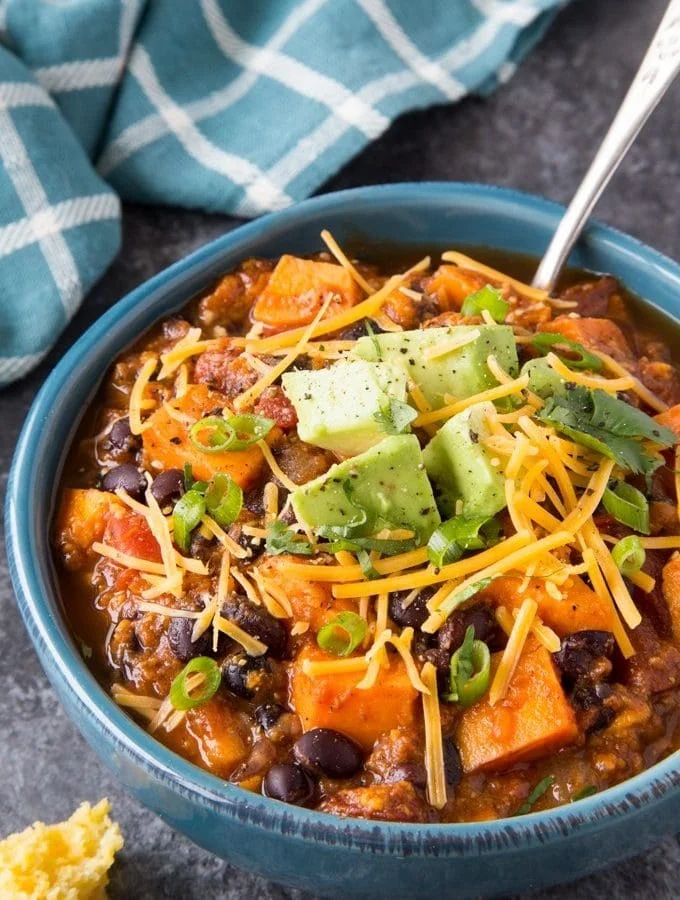
A steaming bowl of chili in under 30 minutes, thanks to the Instant Pot. Sweet potatoes bring natural sweetness while black beans and tomatoes keep it hearty. I always make a big batch and freeze half for later.
What you need: Sweet potato, canned black beans, canned diced tomatoes, canned crushed tomatoes, onion (fresh or frozen).
Salsa Chicken
Two ingredients. That is it. Chicken breasts and a jar of salsa go into the Instant Pot — or slow cooker if that is your thing — and you end up with the most versatile shredded chicken I know. Use it for tacos, salads, grain bowls, wraps. It serves at least 10 different ways.
What you need: Boneless skinless chicken breasts (fresh or frozen), jar of salsa.
Tip: For the slow cooker, use the same ingredient amounts and cook for 1½ to 2 hours on high.
Curried Cauliflower Rice Soup
This is a warming, golden soup that feels like it does good things. Curry, turmeric, cauliflower rice, carrots, kale, and coconut milk make it deeply nourishing without being fussy. It is vegetarian and vegan.
What you need: Cauliflower rice (fresh or frozen), canned coconut milk, vegetable broth, carrots, celery, kale or spinach, onion (fresh or frozen), garlic, olive oil, turmeric, curry powder.
This recipe bends to whatever vegetables you have. Broccoli, peas, bell peppers, potatoes — all work. Add chickpeas or tofu if you want extra protein.
Easy Canned Tuna Pasta
Recipe and photo by Natasha at Salt & Lavender. Six pantry staples and about 15 minutes give you a bright, clean-tasting pasta dish. Olive oil, garlic, lemon, and parsley dress up canned tuna in the best way.
What you need: Canned tuna, pasta, olive oil, garlic, lemon, parsley.
White Bean & Tomato Polenta Casserole
Recipe and photo by Alissa at Connoisseurus Veg. This turns a tube of polenta — that soft cornmeal mush in a shelf-stable tube you find near the pasta aisle — into a proper, hearty dinner alongside cannellini beans, diced tomatoes, and tomato paste.
What you need: Tube of polenta, canned cannellini beans, canned diced tomatoes, tomato paste, olive oil, onion (fresh or frozen), garlic, white wine, pantry spices.
Top with mozzarella or provolone for a melty finish, or use your favorite vegan cheese.
Instant Pot Lemon Garlic Chicken
Tender chicken thighs cooked in lemon, garlic, and butter until they taste like something from a nice restaurant. A splash of heavy cream (or coconut milk) makes the sauce rich without much effort at all.
What you need: Chicken thighs (fresh or frozen), butter, garlic, onion or shallot, chicken broth, heavy cream or canned coconut milk, lemon.
Serve over rice, roasted potatoes, or cauliflower/broccoli rice for a lower-carb option.
Stuffed Sweet Potatoes with Black Beans & Quinoa
Recipe and photo by Erin at Well Plated. Baked sweet potatoes filled with black beans, quinoa, and southwest flavors make an all-in-one meatless meal that the whole family eats without complaint.
What you need: Sweet potatoes, quinoa, canned black beans, onion and bell peppers (fresh or frozen), garlic, lime, cheddar cheese, jalapeño or hot sauce, pantry spices.
Tip: Cook a big batch of quinoa at the start of the week. Or use boil-in-the-bag quinoa or frozen quinoa to keep things fast.
Skillet Sesame Orange Beef
Tender strips of flank steak in a sesame orange sauce made with garlic, ginger, and just a touch of brown sugar. It tastes like takeout but comes together on your stove in about 20 minutes, which feels almost unfair.
What you need: Flank steak (fresh or frozen), an orange, soy sauce, rice vinegar, garlic, ginger, brown sugar, sesame oil.
Chickpea Curry
Recipe and photo by Sonja & Alex at A Couple Cooks. Canned chickpeas, fire-roasted tomatoes, coconut milk, onion, garlic, ginger, and spinach simmer together into something that tastes deeply Indian and takes only 20 minutes.
What you need: Canned chickpeas, canned crushed fire-roasted tomatoes, canned coconut milk, onion, garlic, ginger, olive oil, spinach (fresh or frozen).
A note from Nora
I made the paprika chicken last night and Biscuit sat by my leg for a full eight minutes waiting for something to fall on the floor. Sam said it was the best thing he has had in a while, which coming from him means I am making it again this week.
There is something quietly reassuring about knowing your pantry already holds dinner. It does not have to be fancy. It just needs to be there.
I keep a 9×13 pan (that’s 23×33 cm, for my British and European bakers) on the bottom shelf of my cabinet, and it gets pulled out more than I’d like to admit. It’s the one pan that solves almost every dessert problem I have: birthdays, potlucks, the Tuesday I need something sweet at 5 p.m., the dinner party where the oven is already busy with something savory.
I’m not a trained baker. I’m the person who bakes at 9 p.m. with a toddler asleep upstairs and a dog watching from under the table. So the recipes I come back to share are the ones that work on an ordinary weeknight. Every one of these fits in a 9×13 pan, and every one of them has survived the Tuesday test in my kitchen.
Why one pan? Because I only have one oven
When I can bake for a crowd in a single pan, I bake. The 9×13 shape makes portions easy, serving easy, and cleanup easy. You can line it with parchment if you want zero sticking, and a lid makes it perfect for bringing dessert to someone’s house. I keep a lidded pan specifically for this, because nothing kills a dessert like a cracked top from a bumpy drive.
Cakes for the days that need them
Cake is the first thing most people reach for with this pan, and honestly, I get it. A plain vanilla sheet cake with fluffy whipped buttercream is the move for any occasion that needs frosting but not a tiered centerpiece. I make it for birthdays and for no reason at all. If you love warm spice, a zucchini cake or spice cake with brown butter cream cheese frosting is the upgrade, and in the fall, an apple cake keeps the kitchen smelling like October all season. And yes, an apple crumb cake works beautifully as breakfast. It has, on more than one occasion, been our Saturday morning instead of toast.
Bars that disappear before they’re plated
Handheld bars are the other half of this pan’s superpower. Rice Krispie treats and M&M cookie bars are my go-to party bakes. No mixer, no chilling, no rolling individual dough. I put the tray on the table and it’s gone in a matter of minutes. They’re the desserts I make when I know people will be standing around instead of sitting down, and they pass the Tuesday test because they take less effort than assembling a salad.
The 15 recipes I actually make
Easy & Flavorful Zucchini Cake
Cinnamon-kissed, plush cake under a thick layer of brown butter cream cheese frosting. The kind of thing you make when the garden or the farmers market hands you more zucchini than you can eat raw.
Family-Favorite Rice Krispie Treats
Extra butter, extra marshmallow, a splash of vanilla, a pinch of salt. That’s what takes this from good to the one my family asks for by name. It’s the recipe I make when I want dessert to feel like a treat and not a project.
Soft-Baked M&M Cookie Bars
Soft, chewy, studded with candy. No mixer, no chilling, no rolling. This is the bar I make before a dinner party so I’m not standing at the stove at 6 p.m.
Vanilla Sheet Cake with Whipped Buttercream Frosting
Soft, springy crumb and pillowy whipped vanilla buttercream. The reverse creaming method sounds fancy, but it’s really just a small change in mixing that gives you a cake that holds frosting without getting dense.
Tiramisu
No-bake Italian classic: espresso-dipped ladyfingers and a lightly sweetened mascarpone cream, layered in a sheet pan. This is the one I make when I want something that tastes like a restaurant dessert but doesn’t require a torch or a stand mixer.
Lemon Bars with Shortbread Crust
Buttery shortbread, thick creamy lemon curd. The best part is that the filling goes straight from mixing bowl to oven. No stovetop, no tempering, no fuss. A glass pan works well here if you have one.
9×13 Pan Brownies
A large batch of rich, dense, intensely chocolatey brownies with crackly tops and soft centers. I make these in the big pan when I know they’ll be shared, and I cut them smaller when it’s just Sam, our daughter, and me, which is most weeks.
Chocolate Peanut Butter Cheesecake Bars
Like a peanut butter cup in cheesecake form, without the effort of a full cheesecake. These are the bars I make when I want indulgent but don’t want to babysit a water bath.
Classic Apple Crisp
Warm gooey cinnamon apples and a brown sugar oat topping. Pure and simple, and the pan goes almost straight to the table. In the fall, this is the dessert that makes the whole house smell like a bakery.
Easy Berry Cobbler
Syrupy mixed berries under a golden biscuit crust. Serve it with vanilla ice cream if you have it, which I usually do. It’s the kind of dessert that forgives you for not washing the berries as much as you should.
Brown Butter Pecan Pie Bars
Brown butter, pure maple syrup, toasty pecans. Sweet and salty in every bite, without the fuss of a full pie. I make these around the holidays and they’re gone by the second helping.
Super Moist Spice Cake
Warm spiced flavor in every bite, topped with a generous layer of silkiest brown butter cream cheese frosting. The cake I reach for when I want something cozy without it being a dessert you have to plan for.
The Best Banana Cake I’ve Ever Had
Soft, buttery, ultra-moist, with tangy cream cheese frosting. This is the one that uses up the bananas in the bowl before they turn. I make it when the brown ones are multiplying faster than I can eat them, which is most of the time.
Scotcheroos (Without Corn Syrup)
Eight ingredients, no baking, a bar that combines chocolate, butterscotch, and peanut butter. It’s the one I make when I want something that tastes like it took all day but really took an afternoon.
Peach Cobbler
Juicy sweet peaches and a buttermilk biscuit-like topping. The ultimate comforting homestyle dessert, and the one I make in the summer when peaches are cheap and abundant. Serve it warm if you can. I always do.
And if you’re new to bread pudding: think of it as the coziest cross between French toast, custard, and a dessert casserole. The butter rum version is our favorite. I make it in the 9×13 pan and it’s the first thing Sam asks for when he smells it.
A note on pans
A metal pan is my first choice for most of these. A glass pan is great for sheet cakes and casseroles, and it’s what I use for lemon bars. I also have a ceramic baking dish I love for hosting, especially when I’m serving something like a baked cream cheese French toast casserole. And a lidded pan is worth its weight in travel, because you can bring dessert to a dinner party without wrapping it in three layers of foil.
It’s not just for desserts
One more thing, because I promise I’ll stop talking about this pan: it’s also handy for breakfast and dinner. I use it for blueberry French toast casserole, overnight cinnamon rolls, oatmeal molasses rolls, and stuffed shells. If you only own one baking pan, make it this one. It’s the workhorse that makes the rest of my kitchen feel less crowded.
Maybe that’s the real gift of a good pan: it doesn’t fix everything, but it reminds you that even an ordinary Tuesday can hold something sweet.
A note from Nora: I made the vanilla sheet cake last Tuesday with our daughter helping me spread the frosting. She did a better job than I did. If I can make it on a Tuesday, it’s a keeper.
It’s that time of year when the air gets thick and the idea of a heavy stew starts to feel like a personal attack. I was out on the grill the other evening, salmon on the grate, and I realized this is the meal I reach for when it’s genuinely too hot to cook anything complicated.
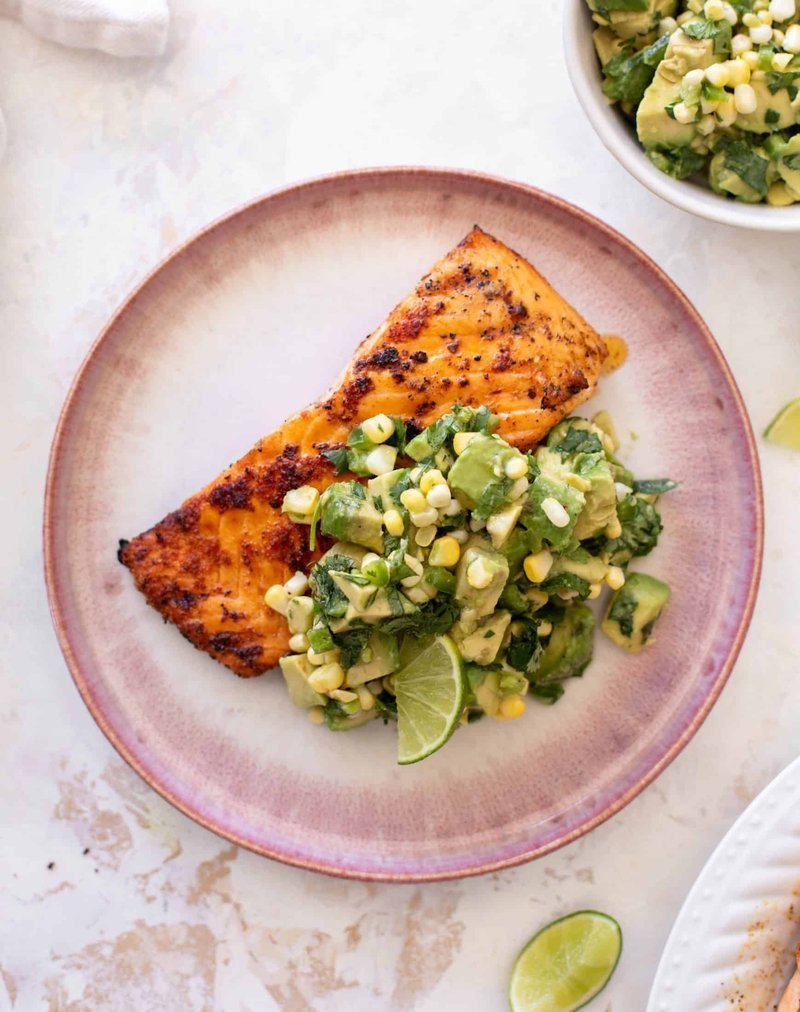
Grilled salmon with avocado sweet corn salsa is one of my most-mad dishes of the summer. It’s light and refreshing when you want something, but very satisfying. Bright, fresh, and super filling. A quick weeknight meal the whole table actually asks for.
Why this one
We have a few meals we make over and over in each season, and this is a version of one of them. Sam and I grill salmon at least once or twice a week, and there’s always a little something on the plate for everyone, so when it’s grilling season, you can find me out there.
Grilling gets a lot easier once you’ve done it over and over again. Nothing beats the smoky, charred flavor, and the cleanup is almost fully eliminated. The next time you need an easy but show-stopping meal, grab a couple of fillets and throw together a quick, bright salsa.
The salsa
This salsa is packed with wonderful ingredients, but my favorite is the sweet corn. I don’t cook it. I cut the kernels straight off the cob, and the crunch is unreal. It tastes so fresh and so sweet that we eat it this way all the time.
There are so many ways to serve it. I love it exactly like this, because it’s so summery and light, especially when it’s ridiculously steamy outside and almost too hot to eat anything other than watermelon. Our daughter loves it over rice, and it’s excellent with a bowl of parmesan herb orzo or some garlic butter zucchini noodles.
And it comes together so quickly. Slice the corn right off the cob, toss it in a bowl with avocado, diced jalapeño, cilantro, and a boatload of fresh lime juice, and you’re golden. I could eat this straight out of the bowl, or with a bag of chips (obviously).
Preheat your grill to the highest setting. Pat the salmon completely dry with a paper towel.
In a small bowl, stir together a big pinch of salt and pepper with the smoked paprika and garlic powder.
In a large bowl, combine the corn, peppers, cilantro, and lime juice with a big pinch of salt and pepper. Set aside.
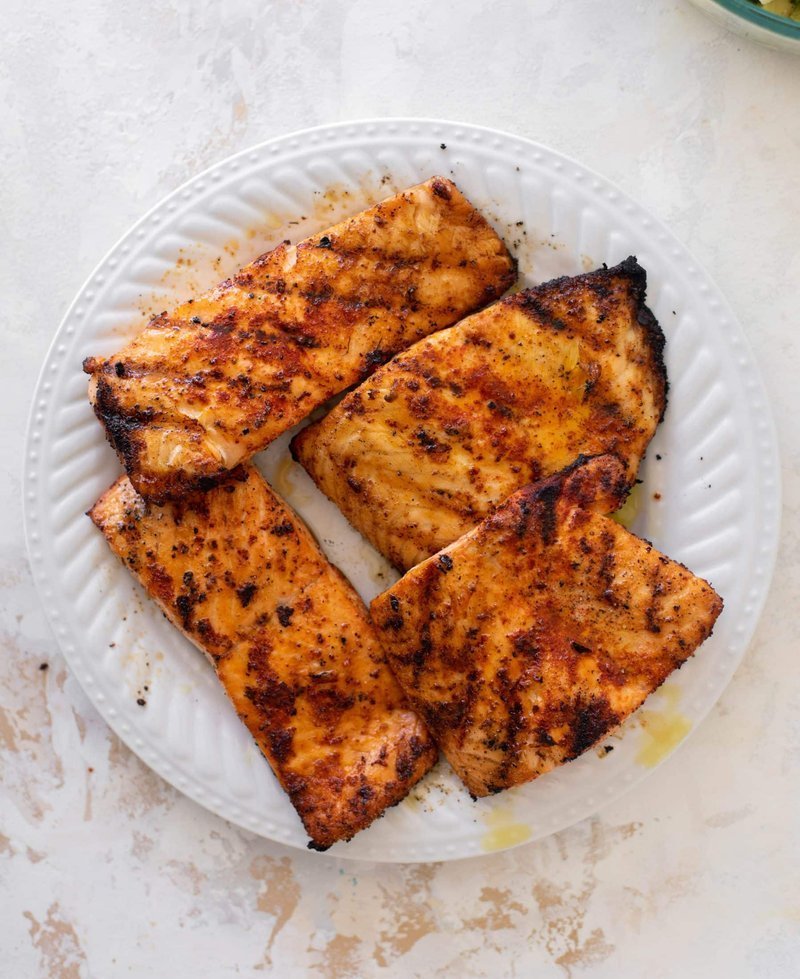
Sprinkle the salmon on both sides with the paprika spice mix. Place it on the grill and grill for 4 minutes, then flip and grill for 3 to 4 minutes more. Transfer the salmon to a plate.
Add the avocado to the corn salsa and toss well. Taste and season more if needed.
Serve the salmon with the corn salsa on top. Enjoy!
The salmon is on the grill in 10ish minutes total. Like, super fast. Throw it on a platter, top it with the salsa, and it’s ready. Buttery, flaky, fresh, and citrusy. Talk about a good Tuesday.
Swaps & notes
Frozen corn in a pinch? Thaw it well and pat it dry. You lose the crunch, but the flavor is still there. If jalapeño is too hot for the kids, seed them carefully and start with just one. And the lime juice is not optional. That’s what makes the whole thing sing.
A note from Nora
My first attempt at this, I cut the corn wrong. Too much avocado, not enough lime, and it tasted more like a salad mistake than a meal. I fixed the ratios, and now it’s the dish the whole family asks for on warm evenings. If I can make it on a Tuesday, it’s a keeper.
Maybe that’s the real gift of a good weeknight recipe. It doesn’t fix anything, but it reminds you that even an ordinary evening can hold something lovely.
It’s the last warm weekend of the year, and you’re already wondering what on earth you’re going to feed everyone.
That’s the real problem with Labor Day. You want a full menu — something for the grill, something cold, something sweet — but you don’t want to plan six different recipes from scratch while Sam is trying to get our daughter to eat a vegetable. So this year I pulled the dishes together in one place, organized by course, so you can just pick and go. No hunting through ten different tabs.
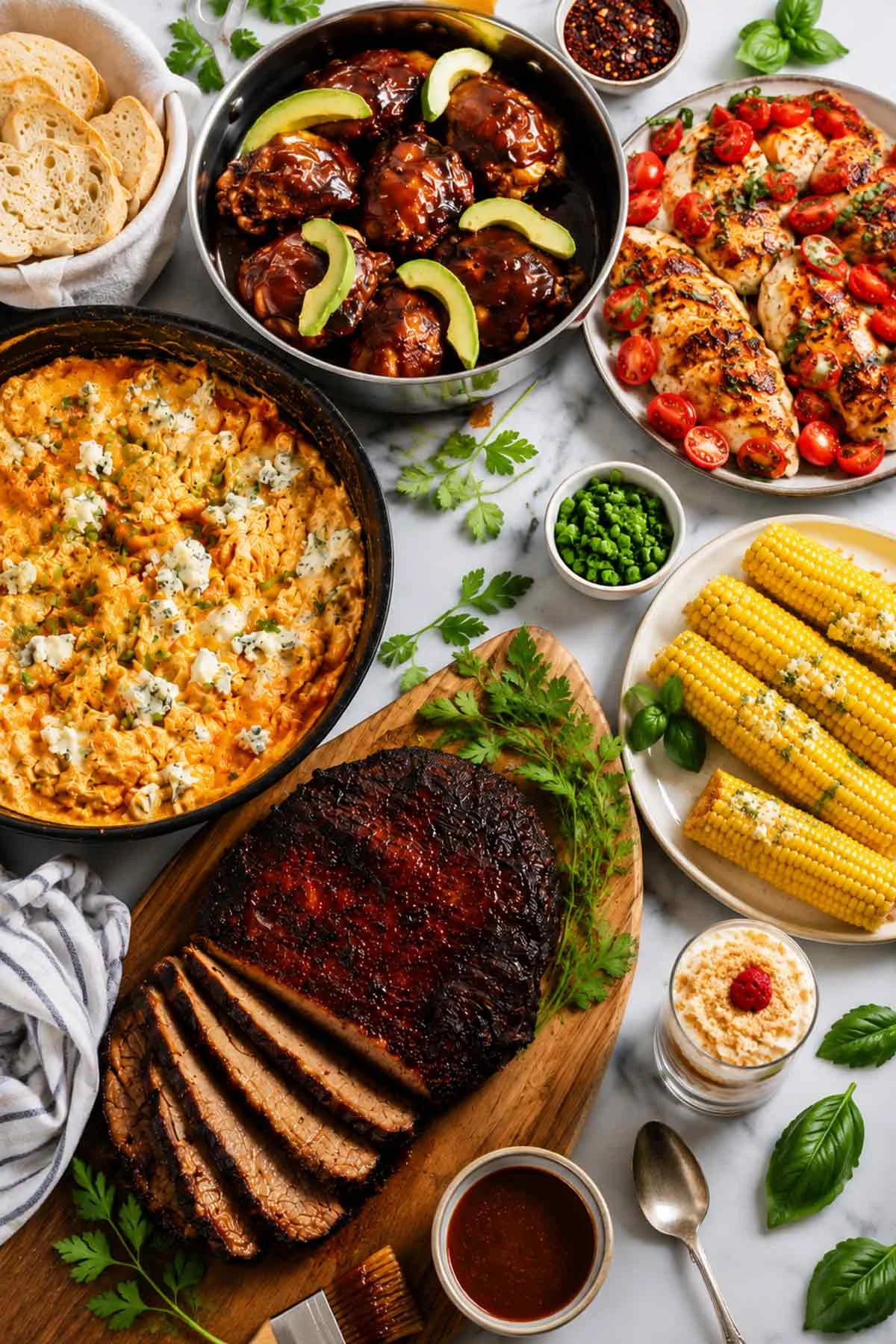
The menu below is a mix of the heavy barbecue staples people come for and the fresh, light bites that balance them out. Everything here is the kind of thing I’d actually host with — nothing that requires me to be in the kitchen for six straight hours, which is exactly what I don’t have on a long weekend.
A few things I’ve learned about hosting
A summer cookout means you’re managing a hot grill, a pile of plates, and a group of people who have all decided to arrive at once. After a few of these in my own backyard, I’ve got a handful of rules that actually keep the day calm enough that I can sit down and eat like the rest of you.
Let the meat come up to room temperature first. Cold protein straight from the fridge onto a hot grill seizes up and cooks unevenly. I take mine out about twenty minutes before it goes on, and that’s the difference between a proper sear and a tough, gray piece of meat.
Save the barbecue sauce for the last few minutes. Most of it — store-bought or homemade — is loaded with sugar, and sugar burns fast over open flame. I brush mine on during the last five minutes of cooking, just long enough for it to caramelize and stick without going dark and bitter.
Keep the cold sides actually cold. Creamy things like potato salad turn on you in late-summer heat. I fill a wide, shallow pan with ice and set the serving bowls right on top of it. The salads stay fresh all afternoon instead of getting warm and a little sad by dinnertime.
Make the desserts the night before. No-bake treats need time to chill and set anyway, so doing them a day early means one less thing on your plate the morning of. Trust me on this one.
What is Labor Day, anyway?
It’s more than just an excuse to light the grill, though we certainly use it that way. The holiday started as a tribute to the American worker, born out of the labor movement’s push for fair wages and better conditions. It was first celebrated as a big street parade in New York City, and President Grover Cleveland signed it into law in June of 1894. It’s now always the first Monday in September — and for most of us, the unofficial end of summer. The last long, warm weekend before the kids are back at school, which is exactly why the backyard grill gets such heavy use.
Appetizers while the grill heats up
You need something on the table early, before the meat is ready and people are getting antsy. These are the ones I reach for first.
Buffalo chicken dip is always the first thing to disappear at my house. I use shredded rotisserie chicken to skip a whole step, and the cream cheese base keeps it thick enough that it actually scoops up with celery and tortilla chips instead of falling apart in your hand. If you want the full method, here’s the recipe I’m working from.
Air fryer mozzarella sticks are the party trick for anyone who wants fried cheese without the mess or the smell. The breading gets a real crunch in just a few minutes, and the cheese melts all the way through inside. It’s the same idea as the deep-fried version, minus the oil everywhere.
Lemon pepper wings are another first-to-disappear classic. The citrus cuts right through the richness of the chicken, and I use a dry rub that holds to the skin as they bake. They come out crispy and tangy, and you don’t need to stand over a fryer the whole time. This one passed the Tuesday test, which is high praise from me.
The main event
The secret to a stress-free cookout is picking your hero protein first, then building the rest of the menu around it. Here’s what I’d actually put on the grill.
Beef brisket is the crowd-pleaser. I rub it with garlic powder, paprika, cumin, and a little chili, then finish it with a barbecue sauce mixed with brown sugar and Worcestershire. It comes out tender with a proper bark on the outside, and it feeds a lot of people from one piece of meat.
Sticky buffalo chicken thighs are my answer when the usual barbecue sauce is getting old. The chicken gets a real sear in the pan, and the glaze is just honey, butter, and hot sauce — the butter thickens it so it actually clings to the meat instead of sliding off into the pan.
Garlic tomato basil chicken is the lighter option, and I love having it on the table. Pan-seared breasts cooked with blistered grape tomatoes, fresh basil, and garlic. It’s fast, it’s fresh, and it gives people a real break from the heavier meats.
And yes, chili dogs belong on the list. You can’t really host a summer cookout without them. I top mine with a thick homemade chili that stays put on the bun instead of sliding off onto your plate, and I set up a toppings bar so everyone can build their own. Biscuit thinks it’s the highlight of the day, and I’m not sure she’s wrong.
Sides that disappear fast
You want a balance of hearty and fresh here, and these are the ones that never make it to the second helping.
Garlic butter corn on the cob — I boil it in a milk and butter base so it picks up flavor from the start, then brush it with a homemade garlic and parsley butter once it’s out. It’s a big step up from plain boiling water, and it’s the first thing people grab off the grill.
Creamy potato salad is non-negotiable at a barbecue. The dressing coats the potatoes well without turning them mushy, and it gives you a cool contrast against all that hot grilled meat. Make it a day ahead so the flavors settle — it’s actually better that way.
Twice-baked loaded potatoes are the side that stands out on the table. The skins are stuffed with a chicken, bacon, and mushroom filling in a white wine sauce, topped with Camembert, and finished with a quick drizzle of honey to balance the saltiness of the bacon.
Macaroni salad — the trick is cooking the pasta just to al dente so it holds its shape when you toss it. I make the dressing with mayonnaise, vinegar, and a touch of mustard, for a clean, tangy finish that cuts right through the richness of the grill.
And for something with zero cooking: avocado tomato corn salad. The sweetness of tender corn against the creamy avocado — it feels like peak summer, it adds color to the spread, and it holds up fine in the heat.
Desserts you can make ahead
I try to avoid firing up the oven in summer if I can help it. These all come together in advance and get served cold, which is exactly what you want after a day of heavy barbecue.
No-bake pineapple cheesecakes are a great lighter alternative to a dense slice of cake. A graham cracker base with a cream cheese and Greek yogurt filling, and the crushed pineapple adds an acidic bite that keeps it from getting too sweet.
Strawberries and cream tiramisu parfaits layer strawberries with mascarpone cream in individual glasses. They look nice on the table, they taste light, and they take very little effort to assemble right before guests arrive.
And if you want a real statement dessert: a New York-style cheesecake made the night before, so it sets up properly in the fridge. It’s the ultimate stress-free option — you do the work early, and it arrives looking like you spent all morning on it.
A pitcher drink, so you’re not the bartender
No cookout is complete without something cold to wash down all that barbecue, and the trick is making it in a batch so you’re not playing bartender all afternoon.
Berry sangria is the one I reach for first. It’s loaded with fresh summer berries and a splash of citrus, and it’s the kind of drink that looks as good as it tastes on the table. The best part: you can mix it up in a big pitcher the night before, and the flavors actually get better as it sits in the fridge.
If your crowd prefers something stronger, frozen strawberry and mango margaritas are the other reliable option. Just keep a bucket of ice and some salt-rimmed glasses within arm’s reach, and you’ve got a whole station that requires almost nothing from you.
FAQs
What’s traditional to serve on Labor Day? Burgers, hot dogs, and barbecue ribs usually take center stage, with potato salad, macaroni salad, and corn on the cob as the go-to sides. The goal is a menu that balances the heavy grilled meats with something fresh and a little acidic.
Do people actually grill on Labor Day? All the time. Because it’s considered the unofficial end of summer, most of us want to spend the day outside around the grill before the weather turns. It’s the perfect reason to cook heavily outdoors one more time.
What should a guest bring to a cookout? A cold side or a make-ahead dessert is your best bet — pasta salad, a fresh corn salad, or no-bake treats all travel well. The host will be grateful, because none of it takes up their oven or grill space.
What’s a good Labor Day dessert? Stick with something you don’t have to bake. Fruit parfaits, no-bake cheesecakes, or a big fruit salad all work. After a full day of barbecue, people usually want something cold and refreshing to finish on.
A note from Nora
The first time I tried to host a full-menu cookout like this, I underestimated how much “making it all from scratch” would actually cost me in standing around the kitchen. Now I plan the menu the same way I plan anything else in my life: pick the few things that matter, make the rest ahead, and leave room to actually be a host instead of just a very tired cook. If I can pull this off in my own backyard on a Tuesday, you can pull it off on the last long weekend of summer. Tell me which recipe you’re making first — I’m curious which one wins.